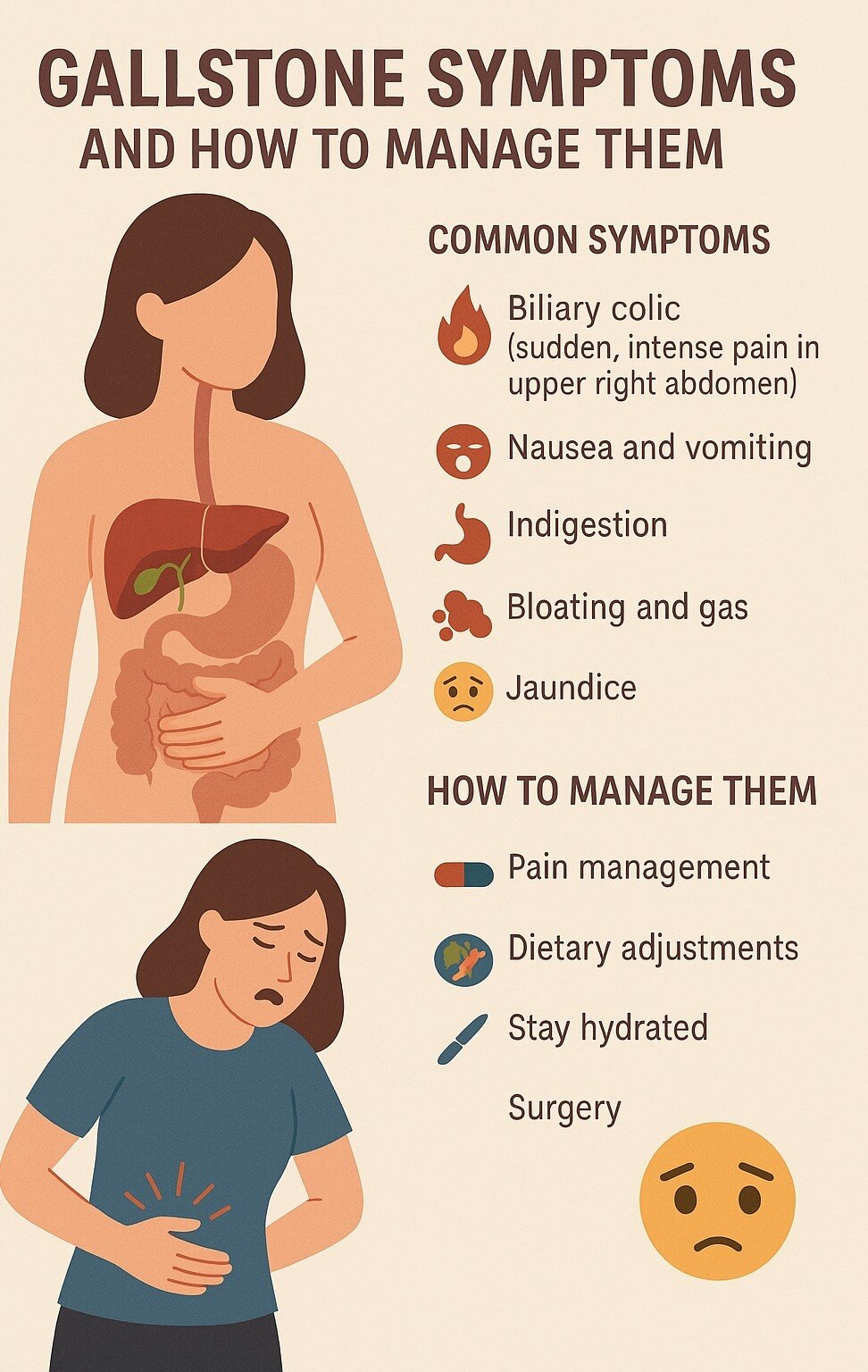
Right-upper-abdominal pain after meals, repeated vomiting, jaundice, or an ultrasound showing stones does not always require the same response. You will be able to distinguish silent stones from symptomatic disease, recognise emergency warning signs, understand the tests and procedures involved, and decide when to arrange a surgical consultation.
Key takeaways
- Book a consultation after a first suspected biliary attack or ultrasound-confirmed symptomatic stone.
- Seek emergency care for severe persistent pain, fever, jaundice, confusion, or repeated vomiting.
- Ultrasound detects gallbladder stones; MRCP or ERCP assesses stones in the bile duct.
- Ask about laparoscopic surgery experience, bile-duct evaluation, risks, recovery, and follow-up.
When do gallstones require a general-surgeon consultation?
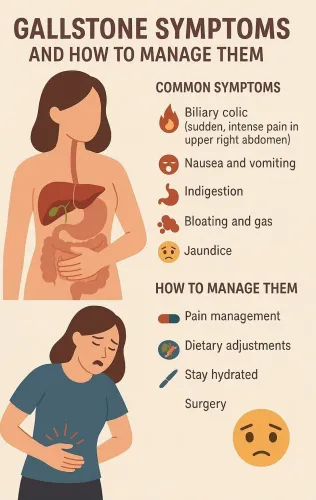
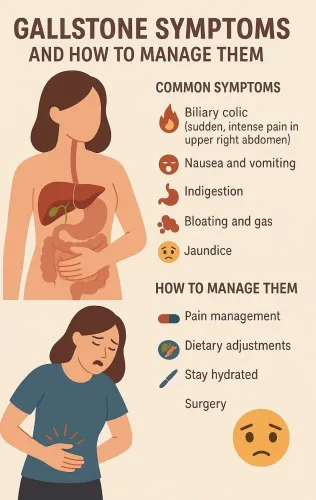
Book a general surgeon gallstones consultation after a first suspected biliary attack, an ultrasound-confirmed symptomatic stone, recurrent attacks, or an emergency-department visit. The usual pattern is steady pain in the right upper abdomen or epigastrium after eating, sometimes spreading to the right shoulder or back, with nausea, vomiting, bloating, or recurrent indigestion.
Finding a stone does not automatically explain every digestive symptom.
| Finding | Usual meaning | Next step |
|---|---|---|
| Incidental stone with no symptoms | Silent gallstone found during imaging for another reason | No preventive removal unless a specific high-risk condition exists |
| Typical pain after meals, lasting hours | Symptomatic gallstone disease | Book a surgical assessment |
| Repeated attacks or activity-limiting pain | Ongoing symptomatic disease | Discuss definitive treatment with a general surgeon |
Arrange review when an attack lasts several hours or stops you from working, sleeping, eating, or carrying out normal activities. Do not rely on antacids or painkillers if the pattern keeps returning.
Gas, reflux, indigestion, and vague upper-abdominal discomfort do not prove gallstones caused the problem. Before recommending surgery, the surgeon should correlate your symptoms with ultrasound findings and consider peptic-ulcer disease, reflux, pancreatitis, liver disease, and functional dyspepsia. Removing the gallbladder may not relieve symptoms from another condition.
Which gallstone symptoms require emergency care?
Go straight to an emergency department for severe or persistent abdominal pain, especially pain lasting several hours or pain with tenderness.
- Fever or chills
- Yellow skin or eyes, dark urine, or pale stools
- Persistent or repeated vomiting, or inability to keep fluids down
- Fainting, low blood pressure, or confusion
| Warning pattern | Possible complication | Why it matters |
|---|---|---|
| Severe right-upper-abdominal pain with tenderness and fever | Acute cholecystitis | The gallbladder may be inflamed or infected |
| Jaundice, dark urine, pale stools, or a widened bile duct | Bile-duct obstruction | A stone may be blocking bile flow |
| Upper-abdominal pain with vomiting and raised pancreatic enzymes | Gallstone pancreatitis | A stone can inflame the pancreas |
| Fever, jaundice, and upper-abdominal pain together | Acute cholangitis | An infected blocked bile duct can progress rapidly |
Cholangitis needs hospital antibiotics, intravenous fluids and other supportive care, and often urgent bile-duct drainage. Do not delay it for a routine outpatient consultation.
A less common emergency is gallstone ileus: a stone enters the intestine and causes obstruction. Escalating abdominal pain, vomiting, bloating, and inability to pass stool or gas require immediate hospital assessment. These symptoms are not uncomplicated biliary colic, and painkillers at home should not postpone evaluation.
What tests show whether a stone is in the gallbladder or bile duct?
Abdominal ultrasound usually starts the investigation. It can show stones inside the gallbladder, gallbladder inflammation, a widened bile duct, and alternative causes of upper-abdominal pain. Order it alongside liver-function tests, including bilirubin; normal results do not rule out stones confined to the gallbladder.
Use this diagnostic checklist:
- Add amylase or lipase when the pain, vomiting, or examination raises concern for pancreatitis.
- Treat a stone seen in the gallbladder as different from a stone lodged in the common bile duct.
- Request magnetic resonance cholangiopancreatography (MRCP) or endoscopic ultrasound when the bile duct is enlarged or liver tests are abnormal but ultrasound does not show a duct stone.
- Use these tests to clarify intermediate-risk cases before exposing you to an invasive procedure.
ERCP is mainly treatment for a confirmed or strongly suspected common-bile-duct stone. It allows the specialist to open the duct and remove the stone, but it is not a routine diagnostic test for every gallstone patient. ERCP can cause pancreatitis, bleeding, infection, or perforation, so MRCP or endoscopic ultrasound can prevent unnecessary ERCP.
If you are considering biliary stone treatment in Vikhroli, ask which result would trigger gastroenterology referral, duct clearance, or hospital care.
What treatment follows a symptomatic gallstone diagnosis?
Recurrent or clearly symptomatic gallbladder stones without acute inflammation are usually treated definitively with laparoscopic cholecystectomy. Pain relief, dietary restriction and medicines can reduce attacks, but they do not empty a gallbladder full of recurrent stones or reliably prevent another episode.
| Situation | Usual treatment | Key timing |
|---|---|---|
| Symptomatic stones without inflammation | Laparoscopic cholecystectomy | Planned after assessment |
| Acute cholecystitis in a fit patient | Early laparoscopic cholecystectomy | NICE recommends within one week of diagnosis |
| Mild gallstone pancreatitis | Cholecystectomy after recovery | Usually during the same hospital admission |
| Severe pancreatitis, infected necrosis or medical instability | Individual hospital plan | Timing depends on recovery and specialist assessment |
An ERCP clears a confirmed or strongly suspected common-bile-duct stone; gallbladder removal addresses the source of further stones. Ask a gallbladder surgery doctor in Vikhroli when inflammation, bleeding, scarring or unclear anatomy could require conversion from laparoscopy to open surgery. Conversion is a safety decision, not proof of an error.
After surgery, contact the treating team promptly for persistent pain, fever, jaundice, wound redness or discharge, or repeated vomiting. These symptoms can indicate bile leakage, a retained duct stone or infection rather than routine recovery.
How should you choose a gallstone surgeon in Vikhroli?
Choose a general surgeon for gallbladder stones in Vikhroli who explains the evidence and the backup plan, not just the operation. During consultation, ask:
- Will you review the ultrasound images, not only the written report?
- Will you assess liver tests, bilirubin, and amylase or lipase when pancreatitis is suspected?
- Is there evidence of a common-bile-duct stone, and would MRCP or endoscopic ultrasound come before ERCP?
- What happens if laparoscopic surgery is unsafe because of scarring, bleeding, severe inflammation, or unclear anatomy?
- Who manages ERCP: the surgeon, a gastroenterologist, or a hospital team?
- Who becomes involved if cholangitis, pancreatitis, a duct stone, or severe inflammation is suspected?
- What postoperative number or service handles fever, jaundice, wound discharge, repeated vomiting, or worsening pain?
Use this comparison during your discussion:
| Option | What to confirm | Why it matters |
|---|---|---|
| Outpatient surgical review | Imaging, blood tests, diagnosis, and operative choices are reviewed | Suitable when you are stable |
| Gastroenterology referral | Duct imaging and ERCP responsibility are defined | ERCP clears a suspected duct stone but carries risks |
| Hospital emergency care | Immediate assessment, antibiotics, supportive care, and drainage access | Fever, jaundice, confusion, low blood pressure, or persistent severe pain cannot wait |
A consultation at ChirayuHealthcare Polyclinic&Diagnostics can correlate symptoms, imaging, and pathology results, then direct you to surgical review, further testing, gastroenterology, or hospital care. Proximity helps only when a gallbladder stone surgeon in Vikhroli can escalate complications instead of substituting an appointment for emergency treatment.
Related products
 | Gall Badder Calculli- stone disease Gall Bladder (Biliary) Stone Treatment Gall Bladder (Biliary) Stone Treatment is done by SILS Ie Single incision laparoscopic surgery which is most advanced form of laparoscopic surgery... View product → |
 | Sils SILS/Scarless Cholecystectomy (single incision laparoscopic Cholecystectomy) SILS SILS is an advanced minimal invasive surgery in which surgery is done exclusively through single incision instead of 3-4 incisions in... View product → |
Frequently asked questions
When do gallstones require a general-surgeon consultation?
Arrange a consultation after a first suspected biliary attack, an ultrasound-confirmed symptomatic stone, recurrent attacks, or an emergency-department visit. Steady right-upper-abdominal or epigastric pain after meals, nausea, vomiting, or pain spreading to the back or right shoulder supports assessment.
Which gallstone symptoms require emergency care?
Seek urgent medical care for severe or persistent abdominal pain, fever or chills, yellow skin or eyes, dark urine, pale stools, confusion, fainting, or repeated vomiting. These signs can indicate gallbladder inflammation, bile-duct obstruction, infection, or pancreatitis.
What tests show whether a stone is in the gallbladder or bile duct?
An abdominal ultrasound is usually the first test for gallbladder stones and gallbladder inflammation. Liver-function blood tests and bilirubin help assess obstruction. MRCP provides detailed bile-duct images, while ERCP can remove a bile-duct stone during the procedure when doctors recommend it.
What treatment follows a symptomatic gallstone diagnosis?
A surgeon may recommend laparoscopic cholecystectomy, which removes the gallbladder through small incisions, for recurrent or complicated symptomatic stones. A bile-duct stone may need ERCP before or around surgery. Treatment depends on symptoms, scan findings, blood tests, and overall health.
How should you choose a gallstone surgeon in Vikhroli?
Ask about general-surgery training, laparoscopic cholecystectomy experience, how bile-duct stones are evaluated, anaesthesia and hospital arrangements, expected recovery, complication warning signs, and follow-up access. Request a written estimate and instructions for tests, medicines, fasting, and the operation.