Gallstones do not all require surgery, and a single navel incision does not make an operation risk-free. You will learn how doctors confirm the diagnosis, what happens during SILS, how it compares with standard laparoscopy, and which questions help you decide whether the approach fits your case.
Key takeaways
- Gallstones need treatment when they cause symptoms, infection, pancreatitis or bile-duct blockage.
- Ultrasound and liver tests help determine whether surgery is necessary and safe.
- SILS uses one incision but can require extra instruments or conversion to standard laparoscopy.
- Ask about complications, conversion rates, recovery time and the surgeon’s SILS experience.
Gallstones, symptoms and the conditions surgeons must distinguish
Gallstones are hard pieces of cholesterol, bile pigments, or both that form inside the gallbladder, a small organ beneath the liver. They cause trouble when they block the gallbladder outlet or bile duct.
A gallbladder stone surgeon will tell you that single incision surgery removes the entire gallbladder, not just the stones, because stones can form again in the remaining organ.
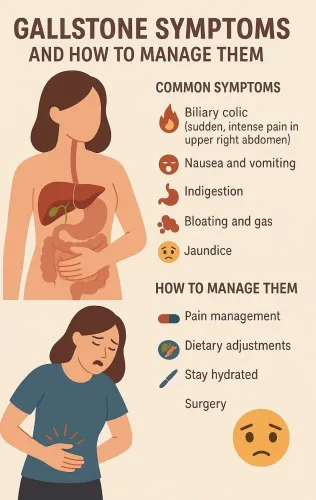
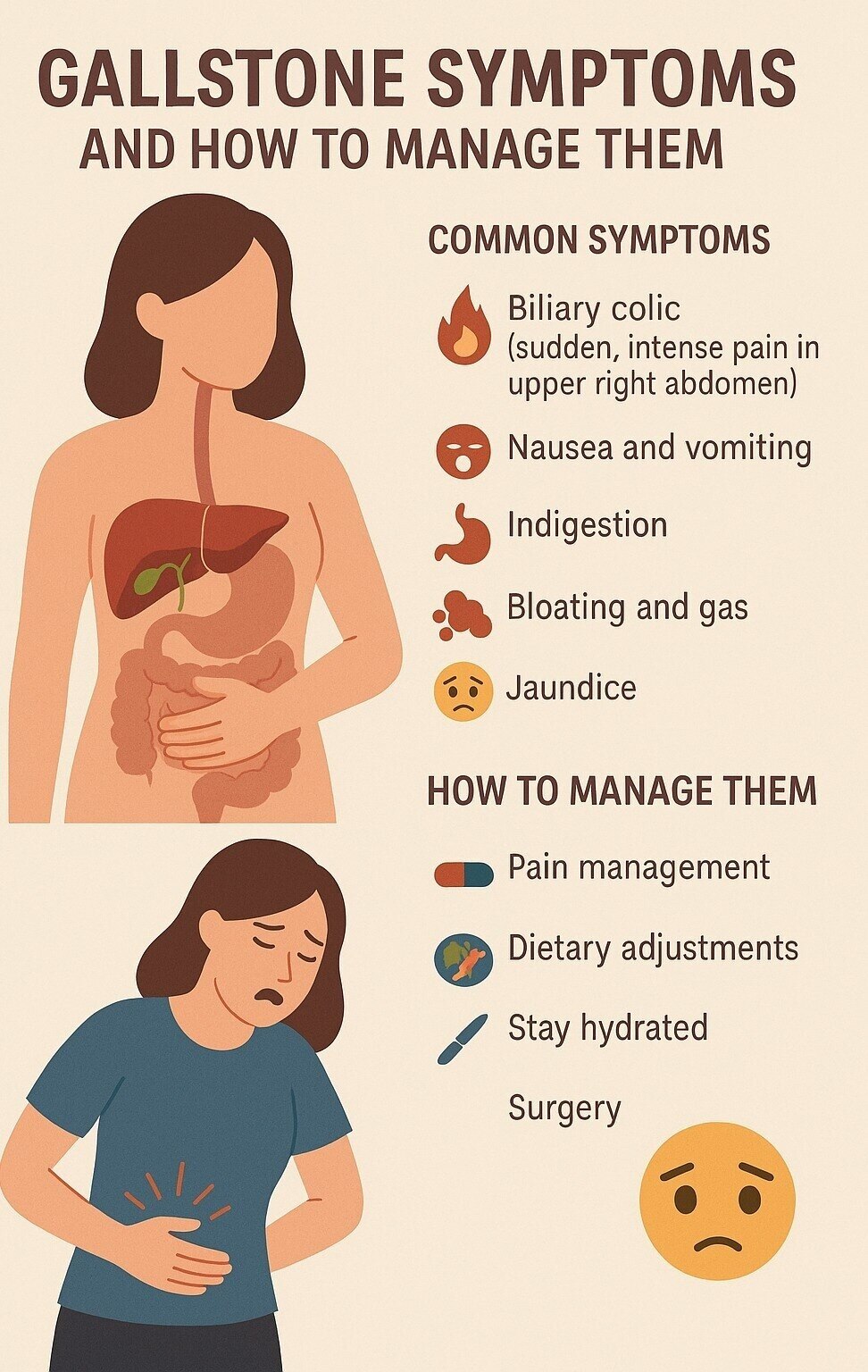
Some stones cause no symptoms and need no preventive operation. Pain under the right ribs or in the upper middle abdomen after a fatty meal, especially when it lasts 30 minutes to several hours, is biliary colic and needs medical assessment.
| Condition | Typical clues | Why it matters |
|---|---|---|
| Asymptomatic gallstones | No pain or digestive symptoms | Surgery is usually unnecessary |
| Biliary colic | Episodic right-upper-abdominal pain, nausea | Repeated attacks can lead to planned gallbladder removal |
| Acute cholecystitis | Constant pain, tenderness, fever, vomiting | The gallbladder is inflamed and may be infected |
| Bile-duct stone | Jaundice, dark urine, pale stools, itching | A blocked duct can damage the liver or cause infection |
| Gallstone pancreatitis | Severe upper-abdominal pain reaching the back, repeated vomiting | Pancreatic inflammation requires urgent assessment |
Seek urgent care for fever with abdominal pain, yellow skin or eyes, confusion, fainting, severe or persistent vomiting, or pain that is worsening. Ultrasound and blood tests, including bilirubin, liver-function tests, amylase, or lipase, help distinguish these conditions; MRCP or another bile-duct scan may be needed.
How tests determine whether surgery is needed and what operation is safest
Ultrasound is usually the first test because it shows gallstones, gallbladder-wall thickening, surrounding fluid, and a widened bile duct. Blood tests then reveal whether the liver or pancreas is being affected. A single incision gallbladder operation does not replace this diagnostic work-up.
| Test | Finding | What it suggests |
|---|---|---|
| Ultrasound | Stones without wall thickening or fluid | Uncomplicated gallstones |
| Liver tests and bilirubin | Raised alkaline phosphatase, GGT, AST, ALT, or bilirubin | Possible common-bile-duct blockage |
| Lipase or amylase | Clearly raised, especially with upper-abdominal pain | Pancreatitis |
| MRCP or endoscopic ultrasound | Filling defect or stone in the common bile duct | Duct stone requiring a duct-clearance plan |
The results usually lead to one of these decisions:
- Typical biliary pain with stones, normal blood tests, and no inflammation supports planned laparoscopic cholecystectomy. The surgeon removes the whole gallbladder, not just its stones; a single-incision approach suits selected patients with clear anatomy.
- Fever, a thickened tender gallbladder, or surrounding fluid indicates acute cholecystitis. Inflammation can make single-incision access unsafe, so conventional laparoscopy, extra ports, or open surgery may be safer.
- Jaundice, dark urine, a widened duct, or abnormal liver tests raises concern for a duct stone. MRCP or endoscopic ultrasound can confirm it; endoscopic stone removal or surgical duct exploration may come before or during gallbladder surgery.
- Severe upper-abdominal pain with raised lipase indicates pancreatitis. Stabilising the pancreatitis comes first, with gallbladder removal planned according to its cause and severity.
What actually happens during single-incision gallbladder surgery
Under general anaesthesia, SILS gallbladder surgery starts with a 1.5–2 cm cut in or beside the navel. The surgeon inserts a multichannel port, inflates the abdomen with carbon dioxide, and guides a camera and slim instruments through that single opening.
The surgeon first identifies the cystic duct and cystic artery, then clips and divides them. The gallbladder is separated from the liver, placed in a retrieval bag, and pulled out through the navel incision. The operation removes the entire gallbladder, not just the stones, because stones can form again inside a gallbladder that remains.
For scarless cholecystectomy explained plainly, “scarless” describes the appearance, not the absence of a wound. The skin and the deeper abdominal-wall layer, called fascia, have still been cut; the surgeon closes the fascia carefully to reduce the risk of a port-site hernia.
The navel can hide the final scar better than separate cuts elsewhere, but infection, bleeding, bile leakage and hernia remain possible. If inflammation, adhesions, bleeding or unclear anatomy blocks a safe view, the surgeon can add another port or change to open surgery. That is a safety decision, not a failed operation.
SILS versus standard laparoscopy: the real benefits and trade-offs
One navel incision does not guarantee less pain, faster recovery, or fewer complications. SILS gallbladder surgery removes the entire gallbladder through one umbilical opening, not just the stones. A scarless cholecystectomy explained honestly is a cosmetic description: the scar may hide inside the navel, but the skin is still cut.
| Approach | Pain and recovery | Scars | Main trade-off |
|---|---|---|---|
| SILS | Usually similar to standard laparoscopy; no consistent clinically important advantage in pain, hospital stay, or recovery | One concealed or less visible navel scar | Instruments crowd through one access point, making exposure and dissection harder |
| Standard laparoscopy | Reliable recovery with three or four small port incisions | Several small scars, usually across the abdomen | More visible incision sites, but familiar instrument angles and access |
The strongest reproducible benefit of SILS is appearance. Its safety depends more on the surgeon’s conventional laparoscopic experience than on the single-incision label, and early experience can mean longer operations or extra ports.
A surgeon may add ports if dense inflammation, adhesions, bleeding, difficult exposure, or unclear anatomy makes one-incision dissection unsafe. This is a safety decision, not a failed operation.
If bleeding cannot be controlled, the bile duct or vessels cannot be identified safely, or injury is suspected, conversion to open surgery through a larger abdominal incision may be the safest choice. Safety outranks scar count.
Who is a candidate, and what should you ask the surgeon before choosing SILS?
An uncomplicated gallbladder stone with a healthy gallbladder wall and clearly mapped anatomy is the usual setting for SILS. A single incision gallbladder operation is less suitable when severe inflammation, dense adhesions, obesity, previous upper-abdominal surgery, a suspected bile-duct stone, or unclear anatomy could restrict safe access.
The goal is safe removal, not preserving a one-incision promise.
| Situation | What it suggests | Decision |
|---|---|---|
| Uncomplicated symptomatic stones | Anatomy is easier to define | SILS may be reasonable |
| Acute inflammation or adhesions | Exposure and dissection may be difficult | Ask about extra ports or subtotal surgery |
| Suspected duct stone, bleeding risk, or unclear anatomy | One access route may limit control | Conventional laparoscopy or open surgery may be safer |
Ask the surgeon:
- How many SILS procedures and conventional laparoscopic cholecystectomies do you perform?
- What findings in my ultrasound, blood tests, or scans make SILS unsuitable?
- How will you obtain the Critical View of Safety before dividing the cystic duct and artery?
- When would you add ports, perform a subtotal cholecystectomy, or convert to open surgery?
- Who handles bile-duct injury, bleeding, or a port-site hernia if it occurs?
- How do you close the navel’s fascial opening to reduce hernia risk?
For someone searching “gallbladder stone surgeon single incision surgery explained,” the best answer is the surgeon’s safety plan, not the smallest scar. ChirayuHealthcare Polyclinic&Diagnostics can help organise diagnostic review before you discuss whether your anatomy supports SILS.
Related products
 | Gall Badder Calculli- stone disease Gall Bladder (Biliary) Stone Treatment Gall Bladder (Biliary) Stone Treatment is done by SILS Ie Single incision laparoscopic surgery which is most advanced form of laparoscopic surgery... View product → |
 | Sils SILS/Scarless Cholecystectomy (single incision laparoscopic Cholecystectomy) SILS SILS is an advanced minimal invasive surgery in which surgery is done exclusively through single incision instead of 3-4 incisions in... View product → |
Frequently asked questions
What symptoms can gallstones cause?
Gallstones can cause right-upper-abdominal pain, nausea, vomiting and pain after fatty meals. Fever, jaundice, dark urine or persistent severe pain need prompt medical assessment because they can indicate infection or bile-duct blockage.
Which tests determine whether gallbladder surgery is needed?
Doctors use your symptoms and examination alongside an abdominal ultrasound. Blood tests such as bilirubin, alkaline phosphatase, AST and ALT help identify bile-duct obstruction or liver inflammation. MRCP or ERCP may be needed when a common bile-duct stone is suspected.
What happens during single-incision gallbladder surgery?
Under general anaesthesia, the surgeon makes one incision, usually at the navel, inserts a camera and instruments, separates the gallbladder, clips the cystic duct and artery, and removes the gallbladder. The team can add ports or convert to standard laparoscopy when safety requires it.
Is SILS better than standard laparoscopic gallbladder surgery?
SILS leaves one main scar instead of several small incisions and may improve cosmetic appearance. Standard laparoscopy gives the surgeon more working angles and remains easier for difficult anatomy. SILS can take longer, cost more and have a higher chance of adding ports or converting to open surgery.
Who is a suitable candidate for single-incision gallbladder surgery?
Suitability depends on the gallbladder’s inflammation, anatomy, previous abdominal operations, obesity, bile-duct stones and the surgeon’s experience. Severe inflammation, unclear anatomy or suspected cancer can make standard laparoscopy or open surgery safer.