


Gallstones do not all require surgery, but pain, infection, pancreatitis, jaundice and bile-duct blockage change the decision quickly. By following the process from symptoms and tests to treatment, discharge and follow-up, you can understand which questions to ask and when a surgeon’s plan needs urgent action.
Key takeaways
- Seek urgent care for severe pain, fever, jaundice or repeated vomiting.
- Expect blood tests and an abdominal ultrasound during diagnosis.
- Laparoscopic gallbladder removal is the usual treatment for symptomatic stones.
- Follow wound-care instructions and report worsening pain, fever or yellow skin.
What gallstones are, and when they need treatment
Gallstones are hard deposits inside the gallbladder, a small organ beneath the liver that stores bile. Cholesterol stones are yellow and account for most cases; pigment stones are darker deposits made largely from bilirubin. A stone can remain harmless, or block the gallbladder outlet or common bile duct and cause inflammation, infection, jaundice or pancreatitis.
| Finding | What it means | Usual response |
|---|---|---|
| Stones found incidentally, with no symptoms | The gallbladder is not causing trouble | Observation, not routine surgery |
| Repeated biliary pain after meals | A stone intermittently blocks bile flow | Surgical assessment for definitive gallbladder stone treatment |
| Persistent pain, fever, jaundice or pancreatitis | Inflammation or a blocked duct has developed | Urgent assessment and treatment; duct clearance may be needed before or around gallstone surgery |
Observation is no longer appropriate when gallstones produce significant or recurring symptoms. Seek urgent medical care for:
- Persistent or severe pain under the right ribs, especially with tenderness
- Fever or chills
- Yellow skin or eyes, dark urine, or pale stools
- Repeated vomiting or inability to keep fluids down
- Confusion, faintness, or unusually low blood pressure
These signs can indicate acute cholecystitis, cholangitis, pancreatitis or obstructive jaundice. A normal ultrasound does not exclude a common-bile-duct stone, so abnormal liver tests or a widened duct may lead to further testing before treatment is chosen.
Removing only the stones leaves the stone-forming gallbladder behind; for symptomatic adults, laparoscopic removal of the gallbladder is usually the definitive option.
What happens at the consultation and during diagnosis
Right-upper-abdominal pain does not prove that a gallstone caused it. The best general surgeon starts by asking when pain began, whether fatty meals trigger it, how long each attack lasts, and whether fever, vomiting, jaundice, dark urine or pale stools accompanied it.
Examination focuses on tenderness under the right ribs, guarding, dehydration and signs of infection.
The initial work-up usually includes liver-function blood tests and an abdominal ultrasound. Blood tests can show bile-duct obstruction or inflammation; ultrasound can show stones, a thickened gallbladder wall, surrounding fluid and a widened common bile duct. A normal ultrasound does not exclude a duct stone or causes such as pancreatitis, ulcer disease or heart-related pain.
Ask how your history changes the investigation and timing. The consultation should cover:
- Previous upper-abdominal operations, pancreatitis, jaundice or bile-duct stones
- Anticoagulants, other medicines, pregnancy possibility, obesity and heart or lung disease
- Whether a common-bile-duct stone has been excluded before surgery
If liver tests are abnormal or ultrasound shows a dilated duct, MRCP is usually the next test; endoscopic ultrasound is an alternative when MRCP is unsuitable or inconclusive. ERCP is not a harmless diagnostic scan: it is an invasive procedure used mainly to remove a confirmed or strongly suspected duct stone.
This is the practical best general surgeon gallstone treatment process. At ChirayuHealthcare Polyclinic&Diagnostics, confirm that pathology results and imaging will be reviewed together before choosing surgery or duct clearance.
Related products
 | Gall Badder Calculli- stone disease Gall Bladder (Biliary) Stone Treatment Gall Bladder (Biliary) Stone Treatment is done by SILS Ie Single incision laparoscopic surgery which is most advanced form of laparoscopic surgery... View product → |
 | Sils SILS/Scarless Cholecystectomy (single incision laparoscopic Cholecystectomy) SILS SILS is an advanced minimal invasive surgery in which surgery is done exclusively through single incision instead of 3-4 incisions in... View product → |
How the treatment choice is made
Observation is appropriate for stones found by chance when you have no symptoms and no complication. Once stones cause repeated biliary pain, inflammation, pancreatitis or another complication, leaving the gallbladder in place carries a recurrence risk.
| Option | What it does | When it applies |
|---|---|---|
| Observation | Monitors without removing stones | No symptoms and no complication |
| Medication | Ursodeoxycholic acid slowly dissolves selected cholesterol stones | A small number of patients who cannot undergo surgery; treatment takes months and stones can return |
| Antibiotics | Treats bacterial infection, not the stones | Acute cholecystitis, cholangitis or sepsis, alongside drainage or surgery when needed |
| ERCP | Removes a stone from the common bile duct through an endoscope | A duct stone, obstructive jaundice or cholangitis; it is an invasive treatment, not a harmless scan |
| Laparoscopic cholecystectomy | Removes the entire gallbladder through small incisions | Most adults with symptomatic gallstones or suitable complications |
| Open cholecystectomy | Removes the gallbladder through a larger incision | Severe scarring, bleeding, dense inflammation or anatomy that cannot be identified safely |
A gallbladder stone surgeon may request MRCP or endoscopic ultrasound before gallstone surgery when liver tests are abnormal or ultrasound shows a widened bile duct. If a duct stone is present, ERCP may clear it before or around laparoscopic removal.
During surgery, the surgeon must establish the critical view of safety before dividing structures. If inflammation or unclear anatomy prevents this, stopping, subtotal removal or conversion to open surgery is a safety decision, not a failure.
What happens during gallbladder surgery and discharge
Most uncomplicated laparoscopic gallstone surgery is performed under general anaesthesia, so you are asleep while the team monitors your breathing, circulation and oxygen levels. Before anaesthesia, the team completes key safety checks:
- Confirms your identity, consent and planned operation
- Reviews allergies, medicines, anticoagulants and fasting
- Checks pregnancy possibility and relevant medical history
- Confirms imaging and whether a common-bile-duct stone needs separate treatment
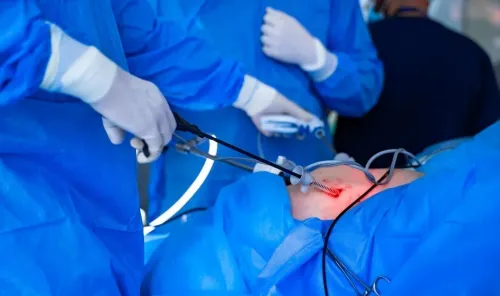
The surgeon inserts a camera and instruments through small abdominal cuts, then identifies the cystic duct and artery. Clipping or dividing them should wait until the critical view of safety confirms the anatomy.
If inflammation, bleeding or scarring makes that view unsafe, the surgeon may stop, perform a subtotal removal, or convert to open surgery through a larger incision. Conversion is a safety decision, not automatically a failure.
A gallbladder stone surgeon may find that the best general surgeon gallstone treatment process requires a different plan if a duct stone is present, including ERCP before or around the operation.
After monitoring in recovery, you may go home the same day or stay overnight. You need an adult to take you home and remain with you initially. Walk early, increase food gradually, and follow the team’s restriction on heavy lifting.
Many people return to routine activities within one to two weeks, although open surgery and other health problems extend recovery.
Recovery milestones, follow-up and warning signs
Pain and fatigue should improve each day after laparoscopic gallstone surgery, while shoulder-tip pain from surgical gas can persist briefly. Most patients increase walking and resume light activities within several days, but lifting and driving must wait until movement is comfortable and prescribed pain medicine no longer affects alertness.
| Time after surgery | Expected progress | Contact your surgeon |
|---|---|---|
| First 24 hours | Small meals, short walks, incision soreness | Call if you cannot keep fluids down |
| Days 2–7 | Less pain, improving appetite, normalising bowel movements | Arrange review if recovery stalls |
| Weeks 2–4 | Gradual return to usual activity, depending on the operation and your work | Ask about persistent diarrhoea or ongoing pain |
Attend the planned follow-up with the best general surgeon for you. The review checks wound healing, pain control, eating, bowel symptoms and the pathology result when the gallbladder was removed. Gallbladder stone treatment is not complete if you ignore a retained common-bile-duct stone or another postoperative complication.
Seek immediate medical review for any of these warning signs:
- Severe or worsening abdominal pain, a rigid or swollen abdomen, or pain that is not controlled by prescribed medicine
- Fever, chills, increasing wound redness, warmth, swelling or pus-like discharge
- Yellow skin or eyes, dark urine, or pale stools
- Persistent vomiting or inability to eat and drink
- Breathlessness, chest pain, fainting or new confusion
Do not wait for a routine appointment when these symptoms appear. They can signal infection, bleeding, bile leakage or a blocked bile duct.
Frequently asked questions
When do gallstones need treatment?
Treatment is usually needed when gallstones cause repeated pain, inflammation, infection, jaundice, pancreatitis or a blocked bile duct. Stones without symptoms often need monitoring rather than surgery.
What happens during a gallstone consultation and diagnosis?
The surgeon reviews your pain pattern, medical history and medicines, examines your abdomen, and may order liver-function blood tests, a complete blood count and an abdominal ultrasound.
How is the gallstone treatment choice made?
The choice depends on symptoms, inflammation, stone location, bile-duct blockage, overall health and surgical risk. Symptomatic gallbladder stones are commonly treated with laparoscopic cholecystectomy.
What happens during gallbladder surgery and recovery?
During laparoscopic cholecystectomy, the surgeon removes the gallbladder through small abdominal incisions under general anaesthesia. Recovery includes wound care, gradual activity, follow-up and watching for fever, worsening pain, vomiting or jaundice.