

Rain alone does not make laparoscopic hernia repair unsafe, but Mumbai’s flooding, traffic and humidity can complicate access, wound care and follow-up. You will be able to separate an emergency from an elective repair, compare laparoscopic hernia repair options, and plan surgery around your health and transport constraints.
Key takeaways
- Seek urgent care for severe pain, vomiting, a firm lump, or inability to pass stool.
- Postpone elective repair for fever, respiratory infection, uncontrolled diabetes, or nearby skin infection.
- Plan transport, medicines, wound care, and follow-up before Mumbai rain disrupts travel.
- Ask which laparoscopic repair suits your hernia, health history, and recurrence risk.
How do you decide whether to wait for elective repair or seek care now?
Hernia treatment during monsoon in Mumbai is not automatically unsafe: rain is not a contraindication to laparoscopic repair. Delay elective surgery for fever, an active respiratory infection, uncontrolled diabetes, a significant skin infection near the operative site, or another problem that raises anaesthetic or wound risk.
A soft swelling that returns when you lie down or with gentle pressure is usually different from a painful lump that cannot be pushed back. Seek urgent hospital assessment for:
- Sudden or worsening pain at the hernia
- A lump that remains stuck and cannot be gently reduced
- Vomiting
- Abdominal distension
- Marked tenderness
- Inability to pass stool or gas
- Fever
- Red, purple, blue or black skin over the swelling
Do not wait for clearer weather if these signs appear. They can indicate incarceration or strangulation, in which trapped bowel loses its blood supply; strangulation can damage bowel and require emergency surgery or bowel resection.
A routine consultation is appropriate for a soft, reducible, non-progressive swelling, allowing the surgeon to assess your anatomy and fitness for elective repair. Sudden pain or obstructive symptoms change the decision from scheduling an operation to urgent assessment.
What should you plan around Mumbai rain before admission and after discharge?
Rain alone is not a reason to cancel elective laparoscopic hernia treatment during monsoon in Mumbai. Plan for access problems, then delay only when fever, respiratory infection, uncontrolled diabetes, skin infection near the operation site, or another anaesthetic risk makes surgery unsafe.
1. Ask the hospital how early to arrive. Add time for waterlogging, traffic diversions and delayed taxis; do not plan to reach just before admission closes.
2. Arrange a reliable adult to accompany you after general anaesthesia. Confirm a dry route home, and identify a nearby contact who can help if pain or the wound worsens.
3. Use the preoperative assessment to disclose smoking, obesity, diabetes control, nutrition, anticoagulants and other medicines, previous anaesthesia problems, heart or lung disease, and who will support you during recovery.
4. Ask why each test is needed. Depending on your age, symptoms, medical history and operation, examples include a complete blood count, kidney function, glucose, pregnancy testing where relevant and an ECG. Avoid a blanket “monsoon health package.”
5. Before admission, confirm fasting instructions, medicine changes, payment or insurance documents, and the planned discharge criteria. Ask when you may walk, bathe, work, drive and attend follow-up.
Do not cross unsafe floodwater to keep an appointment. Call the surgical team and reschedule. Before leaving, protect the incision from rain and arrange follow-up transport, including a backup route if flooding blocks the usual one.
Which laparoscopic hernia repair option fits your hernia and medical history?
Choose the repair by hernia anatomy, previous operation and anaesthetic risk—not by Mumbai’s season or scar size alone.
| Option | What it means | When it fits |
|---|---|---|
| TAPP | Enters the abdominal cavity, then places mesh in the preperitoneal space | Bilateral groin hernias or recurrence after an anterior open repair |
| TEP | Reaches the preperitoneal space without entering the abdominal cavity | A groin hernia when the surgeon’s expertise and your anatomy support this route |
| Open mesh repair | Repairs the defect through an anterior incision | A primary unilateral inguinal hernia, especially when general anaesthesia or carbon-dioxide pneumoperitoneum adds risk |
| Anterior open repair after laparoscopy | Uses a different tissue plane from the earlier posterior repair | Often preferred after a previous posterior laparoscopic repair |
| Open, laparoscopic, robotic or combined repair | Tailors access and mesh placement to the abdominal-wall defect | Incisional, umbilical, epigastric, parastomal or complex recurrent hernias |
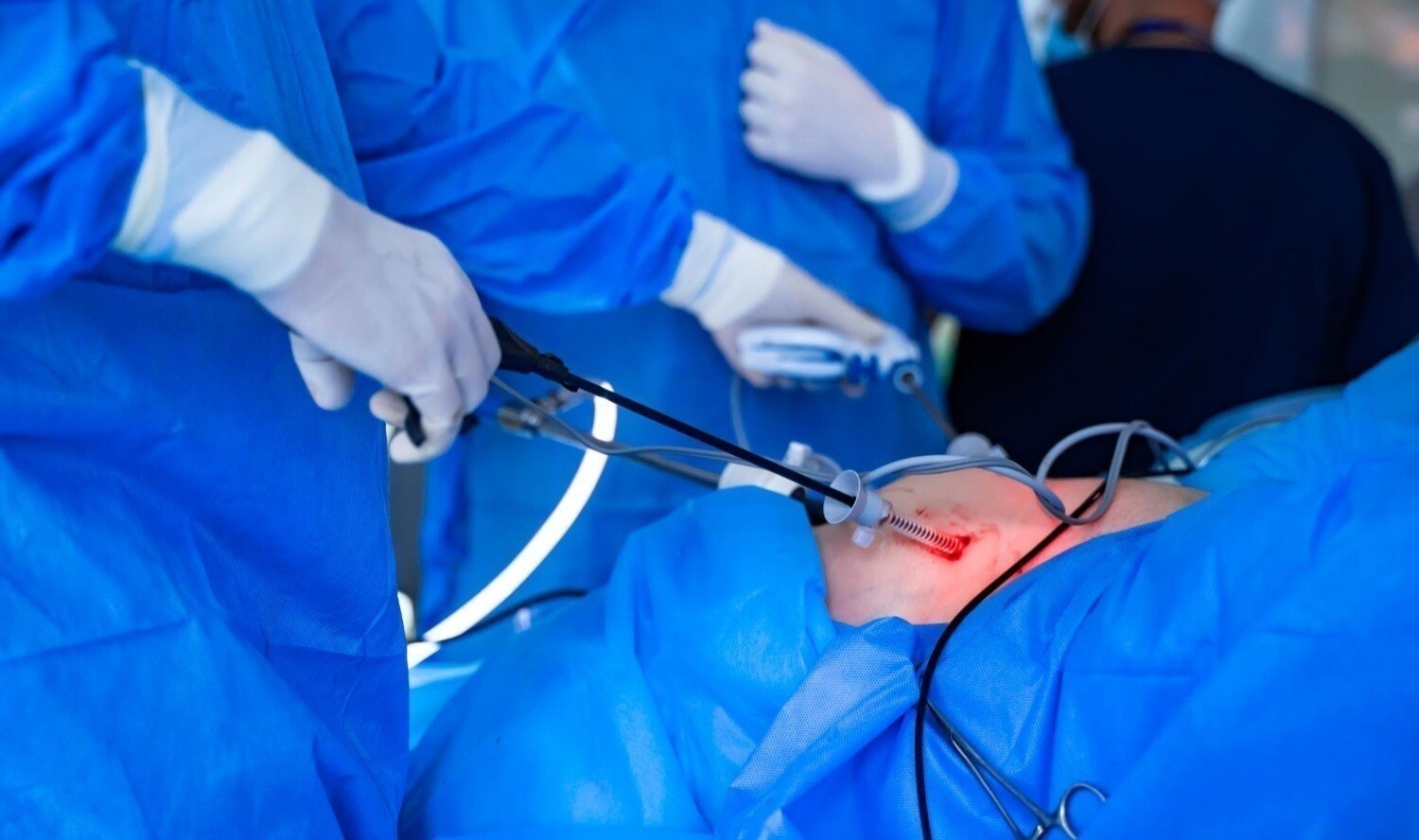
Laparoscopic repair usually requires general anaesthesia. Severe cardiopulmonary disease, extensive adhesions or a complex recurrent defect can make it unsuitable. A defect-specific CT scan helps when examination cannot define the anatomy; it is not automatic for an obvious groin hernia.
Before choosing among laparoscopic hernia repair options, ask:
- Which mesh plane and fixation method will you use?
- How will you manage recurrence, chronic pain, infection or another complication?
- Have you reviewed every previous abdominal operation and mesh repair?
- If searching for “laparoscopic hernia in Mumbai,” does the consultation identify your exact hernia location and prior repair route?
How can you reduce monsoon-related problems during recovery?
Keep the incision clean and dry during travel. Follow your surgeon’s instructions on when showering is allowed, replace a wet or soiled dressing as directed, and keep the wound away from swimming pools and contaminated floodwater until it heals.
1. Pack spare dressings and a clean, waterproof covering for the journey. Do not seal a wet wound under plastic for prolonged periods; arrange dressing care according to your surgical team’s instructions.
2. Do not add antibiotics simply because hernia treatment during monsoon occurs in Mumbai. Infection prevention depends on antimicrobial timing when indicated, hand and skin antisepsis, sterile technique, blood-glucose control and temperature control—not the calendar season.
3. Before discharge, book follow-up transport and identify a backup route if flooding blocks the usual one. Avoid unsafe floodwater; call the surgical team if you cannot travel safely, rather than silently missing the review.
4. Ask who to call outside clinic hours and whether a rapid wound review is available if access becomes difficult. Contact the team promptly for increasing redness, warmth, swelling, pus, wound separation, fever or worsening pain.
Rain does not cause mesh failure or make a successful repair ineffective. A missed review can delay treatment of a wound infection, seroma or recurrence, so continuity of care matters more than extra seasonal medication.
What should you ask a hernia surgeon in Mumbai before booking?
A consultation with a hernia surgeon in Mumbai should produce an anatomy-based plan, not a promise that every hernia suits laparoscopy. For laparoscopic for hernia treatment during monsoon in Mumbai, ask which operation fits your body, medical history and travel constraints.
| Route | What it involves | Question to resolve |
|---|---|---|
| TAPP | Enters the abdomen and places mesh in the preperitoneal plane | Does this suit my anatomy and previous operations? |
| TEP | Reaches the preperitoneal plane without entering the abdominal cavity | Is this safer after reviewing my abdominal history? |
| Open mesh repair | Repairs the defect through an incision | Would this avoid general anaesthesia, pneumoperitoneum or difficult adhesions? |
Ask these questions before booking:
- Where is the hernia, how large is the defect, and is it reducible?
- Have you reviewed every previous abdominal operation and any earlier mesh repair?
- Do I need a defect-specific CT scan, or is examination enough?
- Can I safely receive general anaesthesia, considering my heart, lungs and medicines?
- If you find adhesions or a larger defect, will you change the approach, and what consent or cost follows?
- Which mesh plane and fixation method will you use? How will you manage chronic pain, infection or recurrence?
- What are the admission time, observation period and wound-care instructions?
- Who reviews me if flooded roads delay follow-up?
ChirayuHealthcare Polyclinic&Diagnostics can coordinate surgical review, selected pathology or cardiac testing, and home sample collection when rain makes travel difficult; these services do not replace examination, anaesthetic assessment or urgent hospital care.
Related product
 | Laparoscopic Hernia surgery Laparoscopic Hernial Repair View product → |
Frequently asked questions
How do you decide whether to wait for elective hernia repair or seek care now?
Rain alone is not a reason to delay laparoscopic repair. Seek urgent assessment for severe pain, vomiting, a firm or irreducible lump, abdominal swelling, or inability to pass stool or gas. Delay elective surgery for fever, an active respiratory infection, uncontrolled diabetes, or a significant skin infection near the operative site.
What should you plan around Mumbai rain before admission and after discharge?
Arrange reliable transport with extra travel time, check for flooding, keep admission documents and medicines protected from water, and confirm the hospital’s arrival instructions. Before discharge, plan dry transport, wound-care supplies, prescribed medicines, and a follow-up route that remains practical during heavy rain.
Which laparoscopic hernia repair option fits your hernia and medical history?
Ask the surgeon whether your hernia location, size, previous abdominal operations, recurrence history, anaesthetic risk, and other conditions favour a particular laparoscopic approach. Discuss mesh type and placement, the possibility of open repair, expected pain, recovery time, and what happens if the planned approach changes.
How can you reduce monsoon-related problems during recovery?
Keep dressings and incisions clean and dry, follow bathing instructions, avoid soaking the wound, take medicines exactly as prescribed, and reduce strenuous lifting until cleared. Contact your surgical team for fever, worsening redness, pus, increasing swelling, wound separation, breathing difficulty, or uncontrolled pain.
What should you ask a hernia surgeon in Mumbai before booking?
Ask about the diagnosis, recommended technique, mesh placement, surgeon experience with your hernia type, anaesthesia assessment, expected hospital stay, restrictions, follow-up schedule, total estimated costs, and the plan for complications or conversion to open surgery.