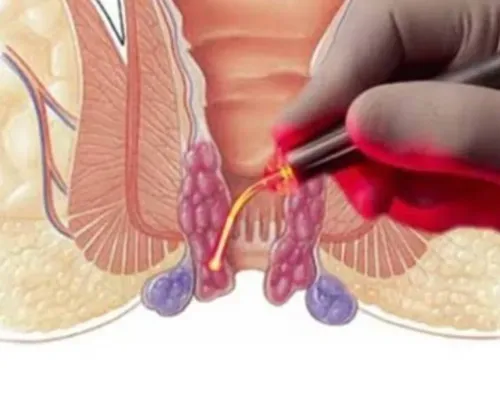


Persistent pus, a recurring painful lump, or a small opening beside the anus deserves more than temporary relief when it bursts. By the end, you will know which symptoms need urgent attention, how doctors map the tract, and how to judge whether a proposed operation protects continence as well as treating the fistula.
Key takeaways
- Persistent discharge after a painful lump needs examination, even if swelling has settled.
- A closed skin opening does not prove that the fistula tunnel has healed.
- Ask how the fistula crosses the anal sphincter before choosing surgery.
- Confirm the surgeon’s experience with your specific fistula anatomy and treatment options.
When drainage, swelling or pain points to a fistula
Persistent pus discharge from a small opening near the anus deserves a fistula surgeon consultation, especially if it follows a painful lump that burst and then settled. An anal fistula is a tunnel between the anal canal and nearby skin; if the tunnel remains, infection can collect again even after the swelling drains.
Arrange a consultation for:
- Ongoing or intermittent pus discharge from the same spot
- A visible opening, crust, or wet patch beside the anus
- Repeated painful swelling that bursts and releases fluid
- Bleeding or soreness that keeps returning after bowel movements
Do not wait for a routine appointment if the pain or swelling is rapidly worsening. Seek prompt medical assessment for:
- Fever with increasing anal pain or swelling
- Redness spreading into the surrounding skin
- Inability to pass urine or stool
- Feeling faint, confused, or severely unwell
These symptoms can signal an abscess or another acute complication that needs drainage or urgent treatment. A closed opening does not prove that the fistula has healed: trapped infection can rebuild pressure and form another abscess.
At the consultation, ask how the doctor will locate the internal opening, trace the tunnel, assess sphincter involvement, and decide whether MRI or examination under anaesthesia is needed. Tell the doctor about stool leakage, previous anorectal surgery, obstetric injury, Crohn’s symptoms, and your current medicines.
Why a closed opening still needs examination
A closed skin opening does not prove that an anal fistula has healed. The internal opening and epithelialised tunnel can remain after drainage stops; trapped fluid can then create another abscess, causing renewed pain, swelling or fever. Arrange an examination even when the skin looks normal and you feel better.
A fistula specialist maps the route instead of judging the scar alone. The examination looks for:
- The external opening: its position, drainage and any healed or scarred area near the anus.
- The internal opening: the point where the tunnel enters the anal canal or rectum.
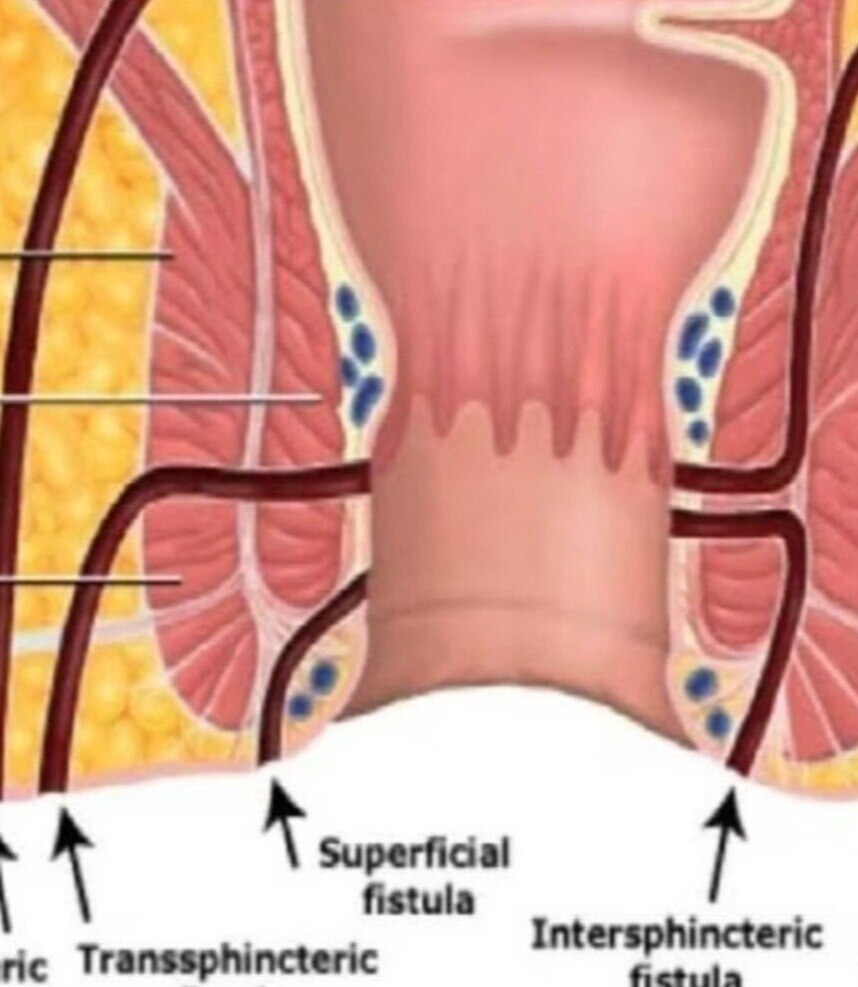
- The tract: its direction, branches and relationship to the anal sphincter muscles.
Inspection, gentle palpation, a digital rectal examination and anoscopy can identify an obvious fistula. Forceful probing can create a false passage, so the surgeon decides whether probing is safe.
Examination under anaesthesia gives better access when pain, scarring or muscle spasm prevents a reliable office examination. During an EUA, the surgeon can locate the internal opening, trace the tract and drain an abscess during the same episode.
Pelvic MRI is particularly useful for a recurrent, complex or hidden fistula, or when secondary extensions are suspected. It is not automatically necessary when a straightforward fistula is clear on clinical examination. A loose seton placed for drainage controls sepsis; it does not by itself prove that the fistula is cured.
How anatomy changes the fistula treatment options
The key measurement is how much anal sphincter muscle the tract crosses. A simple, low fistula usually has one tract and crosses little muscle; a high or complex fistula crosses substantial external sphincter or has branches, multiple openings, a horseshoe path, recurrent disease or Crohn’s disease.
That anatomy determines the fistula treatment options because cutting muscle can trade a high chance of healing for leakage of gas or stool. A surgeon maps the tract by examination and, when needed, MRI or examination under anaesthesia before choosing an operation.
- Fistulotomy lays a low tract open so it heals from the base. It suits a simple fistula when dividing the involved muscle carries a low continence risk.
- A loose seton passes through the tract to keep it draining and prevent another abscess. It controls infection but is not proof of cure.
- LIFT closes the tract in the space between sphincter muscles, preserving more muscle when fistulotomy is unsafe.
- An endorectal advancement flap covers the internal opening with healthy tissue. It avoids cutting much sphincter but can recur and does not guarantee healing.
- Staged treatment uses drainage or a seton first, followed by LIFT, a flap or another definitive procedure after inflammation settles.
- Abscess drainage comes first when a pocket of pus is present. Antibiotics alone do not remove the fistula tract.
Existing leakage, previous anorectal surgery or obstetric sphincter injury makes muscle preservation more important. A smaller continence risk can also mean more procedures, longer wound care and a less predictable cure.
What to ask before agreeing to fistula surgery
Before agreeing, ask: “Where are the internal and external openings, how much sphincter muscle does the tract cross, and what continence risk does this operation carry?” A cure that leaves new leakage is not a sensible trade-off, especially if you already have urgency or stool leakage.
Ask these questions during the consultation:
- Do I need pelvic MRI, endoanal ultrasound, or examination under anaesthesia? MRI helps map complex, recurrent or hidden branches; examination under anaesthesia can locate the internal opening and drain or treat disease.
- What is the proposed sequence: one operation, a draining seton followed by another procedure, or staged treatment?
- How will I dress and clean the wound, and how long should I expect pain, discharge and time away from work?
- What is your recurrence plan if the wound does not heal or another abscess forms?
- Could Crohn’s disease be contributing? Mention diarrhoea, weight loss, abdominal pain, multiple fistulas, non-healing wounds and family history.
- Have prior anorectal surgery or obstetric sphincter injury changed my risk? Tell the surgeon about every operation, existing leakage, urgency and current medication.
| Situation | Question that should be answered | Why it matters |
|---|---|---|
| Simple, low tract | Can fistulotomy divide little or no muscle? | Cutting more muscle increases continence risk |
| High, branching or recurrent tract | Which sphincter-preserving option fits, and why? | A single technique may not suit complex anatomy |
| Existing leakage or prior surgery | How will baseline continence be measured and protected? | New symptoms can be difficult to distinguish from old ones |
Is a general surgeon the right person for your case?
Make your fistula surgery decision in Mumbai by documented experience, not by the label “best general surgeon.” The right surgeon should map the internal opening, external opening, branches and sphincter involvement, then explain how each option affects healing and continence.
A general surgeon is a reasonable choice when they regularly perform proctological fistula procedures and can explain why fistulotomy suits a low, simple tract or why a seton, LIFT or advancement flap better protects the sphincter. “Minimally invasive” does not guarantee a cure, and dividing a high tract can cause significant leakage.
Ask the surgeon to show you the plan for:
- MRI or examination under anaesthesia when the anatomy is uncertain
- Wound care, time away from work and follow-up appointments
- Recurrence, including what happens if the first operation does not heal
- Existing leakage, Crohn’s disease, previous anorectal surgery or obstetric sphincter injury
Discussing your scan and proposed operation with ChirayuHealthcare Polyclinic&Diagnostics can help you test whether the treatment plan matches the tract anatomy and your continence priorities, rather than accepting a technique by reputation alone.
Choose a colorectal surgeon or seek a second opinion when the fistula is recurrent, branching, high or sphincter-involving; when MRI and examination disagree; or when surgery is recommended without a clear anatomical explanation. A second opinion is especially valuable before an operation that would divide substantial sphincter muscle.
Related service
Fistula Surgery we are specialized in complex fistula surgeries View service → |
Frequently asked questions
When should drainage, swelling or pain prompt a fistula surgeon consultation?
Seek an examination when pus discharge persists or follows a painful lump near the anus that burst and settled. These symptoms can indicate a tunnel connecting the anal canal to the skin.
Why does a closed fistula opening still need examination?
The skin opening can close while the internal tunnel remains. Trapped infection can then cause another painful swelling or abscess, so closure alone does not confirm healing.
How does anatomy affect fistula treatment options?
The surgeon must identify the tunnel’s path and how much anal sphincter muscle it crosses. Treatment choices depend on this anatomy because protecting continence is a key surgical goal.
What should you ask before agreeing to fistula surgery?
Ask where the fistula tract runs, whether imaging is needed, which procedure is recommended, how it protects the sphincter, expected wound care, recovery time and recurrence risk.
Is a general surgeon the right person for a fistula case?
A general surgeon with experience in anorectal and minimally invasive procedures can assess many fistulas. Ask about their experience with your fistula type and whether referral to a colorectal specialist is appropriate.