

Gallstones do not automatically require gallbladder removal, and one umbilical incision is not the right approach for every patient. You will learn when surgery is indicated, which tests distinguish gallbladder disease from a common-bile-duct stone, how to assess a surgeon in Mumbai, and what to expect before and after treatment.
Key takeaways
- Asymptomatic gallstones usually need observation, not automatic gallbladder removal.
- Ultrasound, liver tests and MRCP help distinguish gallbladder stones from bile-duct stones.
- SILS uses one incision but cannot guarantee scarless healing or prevent complications.
- Compare a surgeon’s SILS experience, backup plans, total costs and recovery instructions.
When Gallstones Need Surgery—and When They Do Not
Gallstones found incidentally on an ultrasound do not automatically require gallbladder removal. If you have no gallstone-related symptoms, observation is usually appropriate; surgery becomes a discussion when attacks recur or complications develop.
| Situation | What it usually means | Usual next step |
|---|---|---|
| Asymptomatic stones | Stones are present without typical pain or inflammation | Observation and medical advice |
| Recurrent biliary colic | Repeated attacks of steady right-upper-abdominal pain, often after meals | Discuss elective cholecystectomy |
| Acute or complicated disease | Cholecystitis, infection, obstruction, gallstone pancreatitis or a selected complication | Prompt surgical and medical assessment |
Acute cholecystitis may call for early laparoscopic removal when you are fit for anaesthesia. Sepsis, organ failure or high anaesthetic risk can require stabilisation, antibiotics, drainage or delayed surgery instead.
Seek medical care urgently rather than searching for an elective single-incision surgeon if you have:
- Severe, persistent right-upper-abdominal pain
- Fever or chills
- Yellow skin or eyes, dark urine or pale stools
- Repeated vomiting
- Confusion or fainting
Surgery may stop gallstone-related attacks, but it cannot guarantee that every vague symptom, bloating episode or nonspecific abdominal pain will disappear. Single-incision gallbladder surgery in Mumbai is considered only after examination and imaging. Inflammation, obesity, previous surgery, abnormal anatomy or suspected cancer can make standard multi-port or open surgery safer.
Your preference for one incision does not decide eligibility.
The Tests That Show Whether the Problem Is in the Gallbladder or Bile Duct
Before choosing single-incision laparoscopic cholecystectomy, the assessment must show whether stones are confined to the gallbladder or have entered the bile duct. Your clinician will review pain location and timing, fever, vomiting, jaundice, dark urine, pale stools, previous attacks and pancreatitis, then examine for right-upper-abdominal tenderness or guarding.
Initial tests usually include:
- Complete blood count, which can support infection or inflammation
- Liver-function tests, including bilirubin, alkaline phosphatase, AST and ALT
- Abdominal ultrasound, which can show gallstones, gallbladder-wall thickening, fluid, a stone outside the gallbladder or a dilated common bile duct
A normal ultrasound does not always exclude a duct stone. Jaundice, abnormal liver tests or duct dilatation can change the sequence before surgery.
| Treatment | What it addresses | What it does not do |
|---|---|---|
| Cholecystectomy | Removes the gallbladder and its stones | Does not reliably clear a stone already in the common bile duct |
| Choledocholithiasis treatment | Clears a stone that has moved into the common bile duct | Does not remove the gallbladder unless cholecystectomy is also performed |
MRCP or endoscopic ultrasound can clarify suspected duct stones or complications. ERCP is primarily a treatment, used to extract duct stones, rather than a routine diagnostic test for every patient. SILS cholecystectomy alone does not remove every biliary stone.
If anatomy remains uncertain, the surgeon may use intraoperative cholangiography or another imaging method. Adding ports, stopping or converting to open surgery is a safety decision when the duct cannot be identified safely—not evidence that the operation failed.
What SILS Involves, What It Changes and What It Cannot Promise
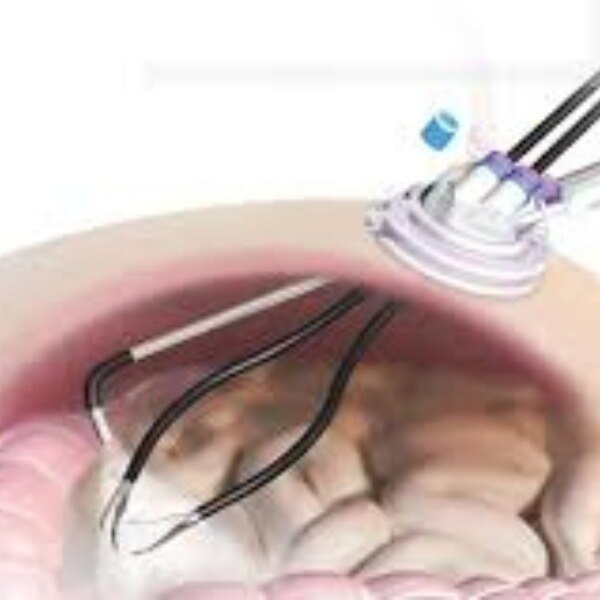
SILS cholecystectomy takes place under general anaesthesia. The surgeon makes one incision within or beside the umbilicus, removes the gallbladder, checks the anatomy and closes the wound. Safety depends on obtaining the Critical View of Safety: clearly identifying the cystic duct and cystic artery before division, not on the number of skin incisions.
Comparison with multi-port laparoscopy is more balanced than advertising suggests:
| Option | Cosmetic result | Pain and recovery | Operating demands |
|---|---|---|---|
| SILS | One less-visible umbilical scar | Pain and discharge timing are often similar | Restricted movement, instrument crowding and lost triangulation |
| Three- or four-port laparoscopy | Several small scars | Recovery is usually comparable | Better instrument angles and exposure |
| Either approach | Final cost depends on fees and hospital stay | No guaranteed faster recovery | Surgeon experience matters more than the scar count |
Obesity, severe inflammation, dense adhesions or unclear anatomy can make exposure difficult. Bleeding or unsafe anatomy may require an added port, conventional laparoscopy or open surgery; that is a safety decision, not a failure.
“Scarless gallbladder surgery problems” starts with a false promise: SILS leaves a scar. Healing can involve infection, wound separation, numbness, persistent pain or an umbilical hernia.
Discuss these SILS cholecystectomy complications before consenting:
- Bleeding or injury to bowel or blood vessels
- Bile leak or bile-duct injury
- Retained common-bile-duct stones
- Wound infection
- Anaesthesia complications or blood clots
A surgeon should explain the conversion plan and how each complication would be treated.
How to Choose a Single-Incision Surgeon and Prepare for the Decision
The search phrase “single for incision laparoscopic surgeon” usually means single-incision laparoscopic surgery (SILS), single-incision laparoscopic cholecystectomy (SILC) or single-port laparoscopic cholecystectomy. In Mumbai, assess the surgeon and hospital, not the marketing label.
Ask these questions directly:
- How many SILS cholecystectomies do you perform, and what are your rates of added-port surgery, open conversion, bile-duct injury and other major complications?
- How will you manage a common-bile-duct stone or unexpected bleeding?
- Does the hospital provide experienced anaesthesia, emergency surgical support and treatment for bile leaks, wound problems and umbilical hernias?
- Will you stop or change the operation if the Critical View of Safety cannot be obtained?
Bring your ultrasound report and images, liver-function results, previous operation notes, medication list, anticoagulant details and allergy information.
Ask about fasting, medication changes, admission or overnight observation, pathology testing of the removed gallbladder, follow-up timing and the emergency contact number.
| Claim | Evidence to request | Why it matters |
|---|---|---|
| Advanced | SILS case volume and complication rates | Experience does not follow from a title |
| Painless | Pain-control plan and consented risks | Surgery still causes wounds and discomfort |
| Scarless | Expected umbilical scar and hernia risk | SILS is not incision-free |
Choose informed consent and a clear contingency plan over promises of “advanced,” “painless” or “scarless” surgery.
Mumbai Planning: Costs, Diagnostic Support and Recovery After Surgery
Request a written, itemised estimate before scheduling single incision gallbladder surgery in Mumbai. “Scarless gallbladder surgery problems” is a useful search term, but SILS still leaves an umbilical wound and requires hospital resources.
Ask the provider to separate:
- Consultation, ultrasound and laboratory tests
- Surgeon, hospital, operating-room and anaesthesia fees
- Histopathology, medicines and a possible overnight stay
- Extra charges for ERCP, added ports or open conversion, and complication treatment
- Insurance documents, pre-authorisation steps and exclusions
Confirm fasting instructions and ask exactly which prescribed medicines to take, stop or adjust, especially anticoagulants and diabetes medicines. ChirayuHealthcare Polyclinic&Diagnostics may provide consultation, blood tests, imaging coordination or home sample collection in Mumbai; the operation itself requires an appropriately equipped hospital and surgical team.
After surgery, follow the dressing instructions, ask when bathing is safe, and progress from clear fluids to light food, then your normal diet as tolerated. Use prescribed pain relief, walk gradually, and follow the stated limits on driving, exercise and lifting. Discharge depends on pain control, eating, walking and stable observations—not a guaranteed timetable.
Ask when follow-up occurs and how the removed gallbladder’s histopathological report will be delivered and reviewed. Seek prompt medical advice for fever, worsening pain, jaundice, persistent vomiting, breathlessness, or increasing wound redness or drainage.
Related products
 | Sils SILS/Scarless Cholecystectomy (single incision laparoscopic Cholecystectomy) SILS SILS is an advanced minimal invasive surgery in which surgery is done exclusively through single incision instead of 3-4 incisions in... View product → |
 | Sils SILS/Scarless Appendectomy (Single incision laparoscopic Appendectomy) SILS Appendectomy is an advanced minimal invasive surgery in which surgery is done exclusively through single incision instead of 3 incisions in... View product → |
Frequently asked questions
When do gallstones need surgery?
Incidental gallstones without symptoms usually need observation. Surgery becomes a discussion when attacks recur or complications such as cholecystitis, jaundice or pancreatitis develop.
Which tests show whether stones are in the gallbladder or bile duct?
Ultrasound usually identifies gallbladder stones. Liver-function tests can indicate bile-duct blockage, while MRCP or endoscopic ultrasound may clarify the duct when findings remain uncertain.
What does single-incision laparoscopic surgery change?
SILS places laparoscopic instruments through one incision, often at the navel. It may reduce the number of skin incisions, but it cannot guarantee a scarless result or eliminate surgical risks.
How should you choose a SILS surgeon in Mumbai?
Ask about the surgeon’s experience with SILS cholecystectomy, conversion to standard laparoscopy, bile-duct injury management, hospital facilities, total charges and postoperative follow-up.
Related items
 | Gall Badder Calculli- stone disease Gall Bladder (Biliary) Stone Treatment Gall Bladder (Biliary) Stone Treatment is done by SILS Ie Single incision laparoscopic surgery which is most advanced form of laparoscopic surgery... View product → |
Fistula Surgery we are specialized in complex fistula surgeries View service → |