

The right treatment depends on whether haemorrhoids bleed, prolapse, contain an external component or have failed earlier treatment—not simply on whether a laser is available. By comparing procedures, warning signs, preparation and recovery, you can enter a surgical consultation with specific questions and a safer basis for choosing a surgeon.
Key takeaways
- Choose treatment by haemorrhoid grade, prolapse and symptoms—not the word laser.
- Rectal bleeding needs assessment because fissures, polyps and cancer can mimic piles.
- Ask about the surgeon’s experience with your specific haemorrhoid grade and procedure.
- Plan for wound care, pain control, bowel-softening measures and time away from work.
Which haemorrhoid grade and symptom pattern should determine treatment?
Grade, prolapse and symptoms should guide treatment more than the word “laser.” The usual pathway is:
| Grade | Typical finding | Treatment usually considered |
|---|---|---|
| Grade 1 | Stays inside the anal canal | Fibre, adequate fluids, shorter toilet time and constipation treatment |
| Grade 2 | Prolapses while straining, then returns alone | Rubber-band ligation or another office procedure if symptoms persist |
| Grade 3 | Prolapses and needs manual reduction | Office treatment, artery-ligation techniques or surgery, depending on prolapse and external tissue |
| Grade 4 | Remains prolapsed and cannot be reduced | Excisional surgery is considered more often, especially with bulky external or redundant tissue |
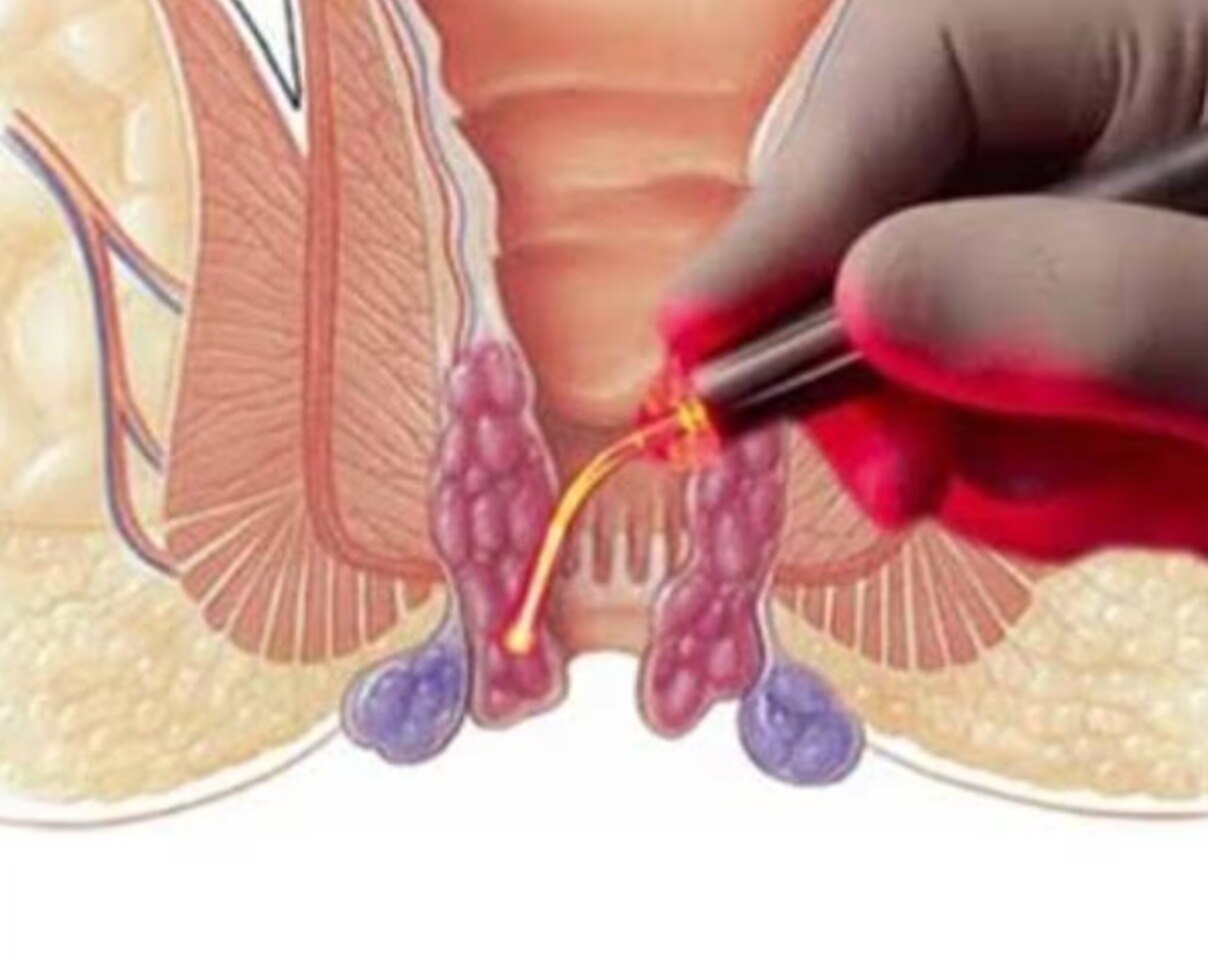
“Laser piles surgery” is not one standard operation. Laser haemorrhoidoplasty places a fibre inside the haemorrhoid cushion and delivers controlled energy to shrink tissue and seal vessels; it usually does not remove prolapsed tissue like excisional haemorrhoidectomy. Laser coagulation and laser-assisted excision treat tissue differently, so ask for the exact procedure.
Grade alone does not decide between laser piles surgery or conventional treatment. Persistent symptoms after earlier treatment, mixed internal-and-external disease, pain, anaemia, overall health and the amount of external tissue can change the plan. A best general surgeon should explain these findings, the alternatives and what happens if symptoms return.
Shrinkage is a poor substitute for removal when Grade 4 prolapse is fixed or tissue is substantial.
How does laser piles surgery compare with conventional procedures?
The main difference is what happens to the tissue: laser haemorrhoidoplasty delivers controlled energy through a fibre to shrink the haemorrhoid and seal vessels, while excisional haemorrhoidectomy cuts haemorrhoidal tissue out. Laser piles surgery versus conventional treatment is therefore a choice about anatomy, durability and recovery—not simply pain.
| Option | What it does | Main trade-off or use |
|---|---|---|
| Laser haemorrhoidoplasty | Shrinks internal haemorrhoidal tissue without open excision | Often less early pain, shorter hospital stay and quicker activity; long-term durability is less certain |
| Rubber-band ligation | Places a band at the base of selected internal haemorrhoids | Usually less pain and downtime than surgery, but repeat treatment and recurrence are more common |
| Sclerotherapy | Injects a solution into the haemorrhoid | Suits selected smaller internal haemorrhoids; does not remove a large prolapse |
| Infrared coagulation | Applies heat to selected internal haemorrhoids | Suits smaller internal haemorrhoids; does not remove bulky prolapsing tissue |
| Excisional haemorrhoidectomy | Cuts out haemorrhoidal tissue | Durable for advanced prolapse, large external components and mixed disease, but bowel movements hurt more and wound care lasts longer |
| Stapled haemorrhoidopexy | Lifts internal prolapse rather than removing external tissue | Early pain can be lower, but recurrent prolapse is a recognised trade-off and it is not routinely first-line |
Laser is a poor fit for fixed Grade 4 prolapse or bulky external tissue because shrinkage does not equal removal. Ask the surgeon to name the exact technique, laser settings and expected recurrence risk; “laser surgery” alone is not a meaningful procedure description.
Studies also use different machines, settings and outcome definitions, so marketing claims about permanent results need careful scrutiny.
When are piles symptoms actually a sign of another condition?
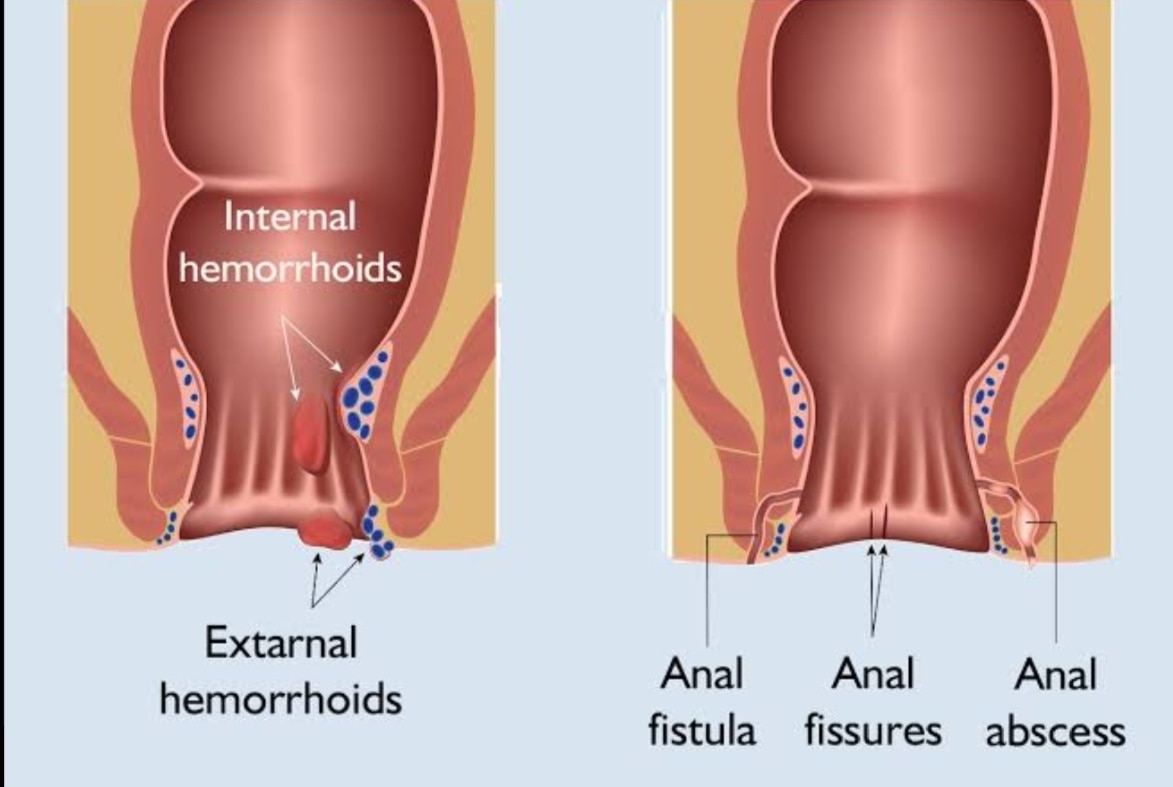
Rectal bleeding is not automatically piles. Internal haemorrhoids commonly cause painless, bright-red blood or tissue that prolapses. A suddenly painful, bluish lump at the anal opening suggests a thrombosed external haemorrhoid instead.
Sharp pain during and after defecation with a visible tear points towards an anal fissure. A recurrent opening, pus or drainage near the anus raises concern for a fistula. A larger mass that protrudes and does not behave like a discrete haemorrhoid can be rectal prolapse.
Diarrhoea, abdominal pain, mucus, fever or repeated bleeding can occur with inflammatory bowel disease. Weight loss, anaemia, changed bowel habits or unexplained bleeding require assessment for polyps or colorectal cancer.
Seek prompt care for:
- Heavy or recurrent bleeding
- Black stool, dizziness or fainting
- Fever or severe, escalating pain
- A persistent lump
- Weight loss or anaemia
- A new change in bowel habits
If you search for “piles doctor near me,” expect an examination rather than an automatic haemorrhoid diagnosis. A clinician may perform a digital rectal examination and anoscopy or proctoscopy.
Blood tests can check haemoglobin and iron status; colonoscopy may be needed for persistent bleeding, changed bowel habits, anaemia, age-related screening or symptoms that the examination does not explain.
What preparation and recovery should you expect from each option?
Preparation depends on the procedure and anaesthetic. Ask which medicines to stop, continue or adjust, especially warfarin, apixaban, rivaroxaban, clopidogrel and aspirin. Never stop a blood thinner without the prescribing clinician’s instructions. Confirm whether you need an enema, bowel preparation, fasting for six to eight hours, local anaesthesia, sedation, spinal anaesthesia or general anaesthesia.
Arrange an adult to take you home after sedation or anaesthesia.
| Option | Preparation | Recovery and trade-off |
|---|---|---|
| Office banding, sclerotherapy or infrared coagulation | Usually little preparation; local anaesthesia is often unnecessary | Cramping, urgency or bleeding can follow; repeat treatment is more common |
| Laser haemorrhoidoplasty | Anaesthesia and bowel preparation vary; confirm the exact technique | Ask about dressings, bathing, pain medicines, stool softeners, fibre, fluids and driving; shrinkage does not remove bulky tissue |
| Stapled haemorrhoidopexy | Confirm bowel preparation and anaesthesia | Early pain may be lower, but recurrent prolapse remains possible |
| Excisional haemorrhoidectomy | Bowel preparation and anaesthesia depend on the operation | Open wounds can make bowel movements painful longer; bleeding, constipation and urinary difficulty need clear instructions |
Avoid straining, heavy lifting and strenuous exercise until the surgeon permits them, then increase activity gradually. A short stay does not mean a pain-free recovery or remove the need for follow-up.
- Ask when you can return to desk work, physical work and driving.
- Ask when exercise can restart and how much time away from work is realistic.
- Confirm when follow-up will check healing or recurrent prolapse.
How do you choose the best surgeon for your particular piles problem?
Search terms such as “laser piles surgeon in Mumbai,” “piles doctor near me” and “best general surgeon for piles” are starting points, not proof of suitability. Verify the surgeon’s registration with the National Medical Commission or state medical council, relevant surgical training, experience with the exact procedure, and where complications will be managed.
Check what the consultation should establish:
| Ask for | Why it matters |
|---|---|
| Grade and examination findings | Confirms whether the problem is internal, external or mixed |
| Size of any external component | Large external tissue may not respond to shrinkage alone |
| Alternatives considered | Shows whether banding, medication or excision was assessed |
| Exact laser technique and anaesthesia | “Laser” describes no single operation |
| Procedure volume and own recurrence or reoperation experience | Reveals relevant practical experience |
| Complication plan | Covers bleeding, infection, urinary retention and recurrence |
| Written recovery and follow-up plan | Sets time away from work, pain control and review dates |
Ask who handles urgent problems after discharge and what happens if symptoms return. A responsible recommendation should explain why the selected treatment fits your anatomy, rather than relying on the word “laser.”
ChirayuHealthcare Polyclinic&Diagnostics can be one Mumbai option for a consultation that links examination findings with procedure selection, preparation and follow-up. Leave with a documented recommendation, not merely a label such as “laser surgeon.”
Related products
 | Laser Piles Laser Fissure Surgery Laser Piles Surgery, Laser Fissure Surgery We are specialized in Laser Treatment of Fissure and Piles, It is one of the most Innovative and Painless Treatment of Piles & Fissures View product → |
 | Proctology Painless piles surgery, Miph, Suture Rectopexy, laser treatment of piles Piles one of the most common cause of Bleeding in motion area. All bleeding needs to be consulted by surgeon to rule out malignancy. View product → |
Frequently asked questions
Which haemorrhoid grade and symptom pattern should determine treatment?
Treatment depends on whether haemorrhoids remain inside the anus or prolapse, whether they return spontaneously or need manual replacement, and symptoms such as bleeding, pain, itching and discharge. Grade I and some Grade II haemorrhoids often respond to dietary changes, medicines or outpatient procedures. Grade III and IV disease may require surgery.
How does laser piles surgery compare with conventional procedures?
Laser techniques use laser energy to shrink or seal haemorrhoidal tissue, while conventional options include rubber-band ligation, haemorrhoidectomy and stapled haemorrhoidopexy. Compare the procedures by haemorrhoid grade, recurrence risk, postoperative pain, anaesthesia, recovery time and surgeon experience rather than marketing claims.
When are piles symptoms actually a sign of another condition?
Seek assessment for first-time or persistent rectal bleeding, black stools, weight loss, anaemia, a change in bowel habits, fever, severe pain or a lump that does not behave like a prolapsing haemorrhoid. Anal fissures, fistulas, polyps, inflammatory bowel disease and colorectal cancer can cause similar symptoms.
What preparation and recovery should you expect from each option?
Your preparation can include a medication review, examination, blood tests when indicated, fasting instructions and arranging transport after anaesthesia. Recovery varies by procedure; follow instructions for pain relief, stool-softening treatment, fluids, fibre, wound care, activity and warning signs such as heavy bleeding or fever.
How do you choose the best surgeon for your particular piles problem?
Choose a qualified general or colorectal surgeon who examines you, confirms the haemorrhoid grade, explains non-surgical and surgical alternatives, states the expected benefits and risks, and answers questions about recurrence, anaesthesia, follow-up and emergency contact arrangements.
Related service
Morvyat we are specialized in Painless morvyat- piles surgery View service → |