


Appendicitis can begin with ordinary stomach pain but progress to perforation, peritonitis, or sepsis. You will learn which symptoms need emergency assessment, how doctors confirm the diagnosis, when surgery is safer than antibiotics, and what to ask before choosing an appendix surgeon.
Key takeaways
- Seek urgent assessment for worsening lower-right abdominal pain, vomiting, fever, or tenderness.
- Doctors combine an examination, blood tests, urine testing, and imaging to confirm appendicitis.
- Appendectomy is usually needed for perforation, abscess, peritonitis, or worsening symptoms.
- Ask about laparoscopic surgery, complications, recovery time, and antibiotic alternatives.
Which appendicitis symptoms need urgent medical assessment?
Appendicitis surgery symptoms often begin with pain around the navel that moves to the lower right abdomen. Pain that worsens when you walk, cough, or move, along with loss of appetite, nausea, vomiting, fever, or abdominal tenderness, needs urgent medical assessment.
Diarrhoea, constipation, or urinary frequency and burning can occur when an inflamed appendix irritates nearby bowel or bladder structures.
| Level | Symptoms | What to do |
|---|---|---|
| Urgent assessment | New or worsening right-sided abdominal pain, tenderness, fever, nausea, vomiting, appetite loss, diarrhoea, constipation, or urinary symptoms | Arrange same-day medical assessment; do not wait for a routine appointment |
| Immediate hospital evaluation | Severe or rapidly worsening pain, a rigid or swollen abdomen, fainting, confusion, persistent vomiting, high fever, or chills | Go straight to a hospital emergency department |
Pain does not always follow the classic pattern. Children, older adults, pregnant patients, and people whose appendix lies in an unusual position can have pain elsewhere, including the pelvis, flank, or upper abdomen.
Temporary pain relief followed by widespread abdominal pain is an emergency: a ruptured appendix can briefly reduce pressure before infection spreads through the abdomen. Apparent improvement is not reassuring.
How do doctors confirm appendicitis instead of a similar condition?
Symptoms alone cannot determine whether appendectomy is needed because appendicitis can resemble urinary, intestinal, and reproductive conditions. Doctors begin with when the pain started, where it moved, vomiting, bowel changes, urinary symptoms, menstrual history, pregnancy possibility, previous operations, and medical conditions.
The assessment then combines:
- Abdominal examination for tenderness, guarding, rebound pain, rigidity, swelling, and pain with movement.
- A white-cell count and C-reactive protein to assess inflammation.
- Urine testing for blood, infection, or other urinary clues.
- A pregnancy test when pregnancy is possible, because it changes imaging and helps assess ectopic pregnancy.
A normal white-cell count or no fever does not exclude appendicitis. An elevated white-cell count or C-reactive protein does not prove it; abnormal results support risk assessment but cannot replace examination and imaging.
| Test | Main use | Important limitation |
|---|---|---|
| Ultrasound | Common first test for children, young patients, and pregnancy because it uses no ionising radiation | A nondiagnostic scan does not rule out appendicitis |
| Contrast CT | High-accuracy evaluation for many adults and assessment of complications | Uses ionising radiation and contrast requires clinical consideration |
| MRI | Radiation-free option during pregnancy when ultrasound is inconclusive | Do not delay needed care while waiting for access |
Doctors also distinguish kidney stones, urinary infection, gastroenteritis, ovarian cyst or torsion, ectopic pregnancy, pelvic inflammatory disease, Crohn’s disease, and diverticulitis. The diagnosis rests on the combined findings, not one symptom or test.
When is appendix surgery needed, and when can antibiotics be considered?
A general surgeon—when appendectomy is needed for appendicitis—combines the history, abdominal examination, white-cell count, C-reactive protein, pregnancy status, imaging, and clinical progress. Pain alone does not decide the treatment.
Uncomplicated appendicitis means an unruptured appendix without an appendicolith, abscess, or diffuse peritonitis. Selected adults can discuss antibiotics instead of immediate surgery, but this choice requires reliable follow-up and acceptance of possible recurrence, repeat emergency visits, and later appendectomy.
The CODA trial found that about 29% of patients assigned to antibiotics underwent appendectomy within 90 days, about 40% by one year, and about 49% by three to four years. An appendicolith raises the risk of antibiotic failure and complications, so antibiotics are not a universal substitute for surgery.
These findings push treatment toward urgent operative source control:
- Perforation, gangrene, diffuse peritonitis, widespread infection, uncontrolled sepsis, or clinical deterioration generally require urgent surgery.
- A localised abscess or phlegmon may first receive antibiotics with or without image-guided drainage, followed by reassessment.
- After uncomplicated removal, postoperative antibiotics are not routine.
- Perforation, abscess, or peritonitis usually requires postoperative antibiotics, with duration guided by source control and recovery.
Thus, when is appendix surgery needed? It is usually needed when testing and the clinical course show appendicitis that will not safely resolve with observation or antibiotics, especially with complications.
Which appendectomy approach fits the appendix and the severity of disease?
The smallest incision is not automatically safest: the right approach depends on disease severity, appendix position, patient factors, available equipment, and surgeon expertise.
| Approach | Access | Main trade-offs |
|---|---|---|
| Conventional laparoscopy | Several small incisions with separate camera and instrument access | Usually smaller wounds and recovery than open surgery; provides flexible instrument movement and visibility |
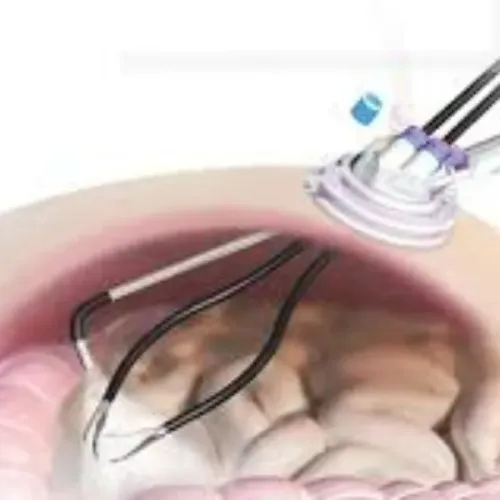
| SILS | One incision, usually near the navel, for the camera and instruments | Fewer visible incisions, but crowded instruments can limit movement and visibility |
| Open appendectomy | A larger incision in the lower right abdomen, or another site chosen for the situation | Direct access, useful when disease or anatomy makes minimally invasive surgery unsafe |
Conventional laparoscopy is generally preferred when appropriate expertise and equipment are available. SILS is not automatically better: the operation can take longer, require an additional port, and leave a scar around the navel. Calling it “scarless” is misleading.
Severe inflammation, perforation, bleeding, difficult anatomy, or poor visibility can make laparoscopy unsafe. The surgeon may then convert to an open operation; conversion is a safety decision, not a failure.
Open surgery can also be the planned choice when the appendix is in an unusual position or infection has spread. A single incision does not remove the risks created by advanced disease, and fewer skin openings do not guarantee better visibility or safer instrument control.
What should you ask during an appendectomy consultation in Mumbai?
Choose an appendix surgeon near me by checking the service around the whole emergency pathway, not the incision advertised. Ask whether appendicitis is confirmed or still being evaluated, and whether imaging shows an appendicolith, perforation, abscess, or diffuse peritonitis.
Ask these questions during the consultation:
- Have antibiotics started, and what is the planned duration?
- Is observation, image-guided drainage, or surgery recommended, and why?
- Which operation is planned: laparoscopic or open?
- Where will the incisions be?
- When might laparoscopy need conversion to open surgery?
- What monitoring, pain control, diet review, and warning signs follow the operation?
- Will pathology examine the removed appendix?
| Observation | Continued examination, blood tests, and sometimes repeat imaging | Selected stable patients when the diagnosis or treatment plan remains uncertain |
|---|---|---|
| Drainage | Image-guided drainage plus antibiotics | A localised abscess or phlegmon that does not require immediate operative source control |
| Surgery | Removal of the appendix, with source control | Confirmed disease with deterioration, perforation, diffuse peritonitis, gangrene, or uncontrolled sepsis |
Prioritise a facility with emergency surgical assessment, anaesthesia, ultrasound or CT, laboratory testing, pathology, and postoperative monitoring. A technique alone does not establish safety.
For an appendectomy consultation in Mumbai, ChirayuHealthcare Polyclinic&Diagnostics can be considered when surgical assessment needs to connect with diagnostic testing. Severe or rapidly worsening pain, a rigid abdomen, fainting, confusion, persistent vomiting, or high fever requires immediate hospital evaluation, not a routine booking.
Frequently asked questions
Which appendicitis symptoms need urgent medical assessment?
Seek urgent care for pain that moves to the lower right abdomen, worsens with movement, or occurs with vomiting, fever, loss of appetite, or tenderness. Severe pain, a rigid abdomen, confusion, fainting, or repeated vomiting requires emergency assessment.
How do doctors confirm appendicitis instead of a similar condition?
Doctors assess your pain pattern and abdomen, then use a complete blood count, C-reactive protein, urine testing, and imaging when needed. Ultrasound or CT can identify an inflamed appendix and other causes of abdominal pain.
When is appendix surgery needed, and when can antibiotics be considered?
Appendectomy is usually recommended when the appendix has perforated, caused peritonitis or an abscess, or symptoms are progressing. Antibiotics may be considered for selected uncomplicated cases after imaging and a surgeon’s assessment, with a plan for recurrence or treatment failure.
Which appendectomy approach fits the appendix and the severity of disease?
Laparoscopic appendectomy uses small incisions and is common for uncomplicated disease. Open surgery may suit a ruptured appendix, widespread infection, difficult anatomy, or a need to control contamination.
What should you ask during an appendectomy consultation in Mumbai?
Ask whether imaging confirms appendicitis, whether the disease is uncomplicated or perforated, which operation is recommended, the anaesthesia plan, hospital stay, warning signs, expected recovery, and whether antibiotics alone are appropriate.