


A laparoscopic hernia repair involves more than making small cuts: the surgeon must identify the defect, reach the correct tissue plane, return the hernia contents, and position mesh over every likely weak point. By the end, you will understand each operative step, how TAPP differs from TEP, and when laparoscopic repair is a better or worse choice than open, robotic, or nonoperative care.
Key takeaways
- A physical examination confirms many hernias; ultrasound or CT helps when findings are unclear.
- TAPP enters the abdominal cavity; TEP stays outside it in the preperitoneal space.
- Laparoscopic repair uses small incisions but does not mean scar-free surgery.
- Your anatomy, previous operations and medical conditions guide the hernia surgery choice.
How is a hernia confirmed, and which types can laparoscopy treat?
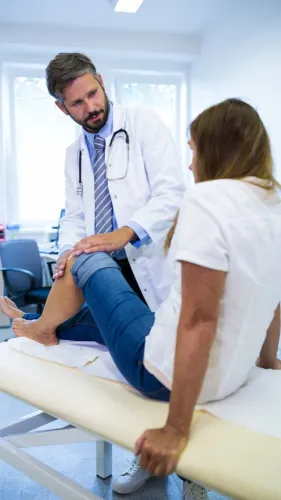
A surgeon usually confirms a hernia from your symptoms, medical history and examination before ordering tests. Ask about a bulge, dragging discomfort, pain with lifting, previous repairs and abdominal operations.
The surgeon examines you standing and lying down, asks you to cough or strain, and checks whether the lump reduces when you relax or with gentle pressure. Ultrasound helps find an occult hernia that has no obvious bulge and can assess femoral or recurrent defects.
CT is more useful for incisional, ventral or complex hernias, suspected bowel involvement, and unclear findings after previous surgery.
Laparoscopic surgery can address:
- Inguinal hernias
- Bilateral inguinal hernias through the same small port incisions
- Recurrent inguinal hernias after an anterior open repair
- Femoral hernias
- Ventral hernias
- Incisional hernias
The examination also establishes urgency, which directly affects your hernia surgery options.
| Finding | What it means | Usual implication |
|---|---|---|
| Reducible lump | The contents return into the abdomen when lying down or with gentle pressure | Non-emergency assessment and planned repair discussion |
| Incarcerated hernia | The lump cannot be pushed back, but there are no clear signs of compromised blood supply | Prompt surgical assessment |
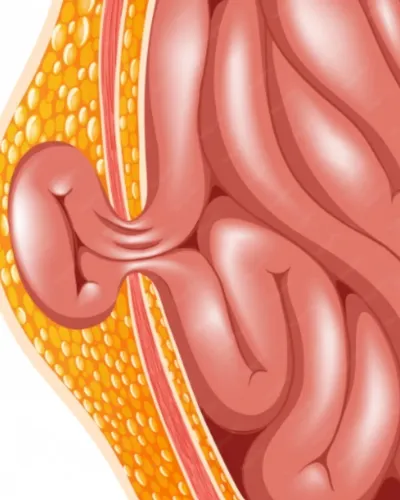
| Strangulated hernia | Trapped tissue has impaired blood flow, often with severe pain, vomiting, tenderness or skin changes | Emergency surgery; laparoscopic hernia repair may not be appropriate |
A painful, irreducible lump or vomiting requires urgent medical attention.
What happens during laparoscopic hernia repair, step by step?
For a laparoscopic hernia repair explained step by step, expect a controlled operation under general anaesthesia, not merely a small-scar procedure.
1. After preoperative checks, fasting, and medication review, you receive general anaesthesia. The surgical team positions and cleans your abdomen and groin.
2. The surgeon creates working space by inflating the abdomen with carbon dioxide for a TAPP repair, or the preperitoneal plane for a TEP repair.
3. Several trocars enter through small abdominal incisions. These hollow ports hold the camera and instruments.
4. The camera shows the abdominal wall and groin anatomy. The surgeon identifies the hernia sac, spermatic cord structures, blood vessels, and the exact defect before dissecting further.
5. The sac and any trapped fat or bowel are carefully returned to the abdominal cavity. The surgeon then develops the preperitoneal space behind the abdominal wall.
6. A broad mesh is placed in that space to cover the entire myopectineal orifice, including the potential inguinal and femoral hernia sites. In standard groin repair, mesh sits behind the peritoneum, not directly against bowel inside the abdominal cavity.
7. The surgeon fixes the mesh when the anatomy, defect size, or hernia type calls for fixation. Some repairs rely on accurate placement and tissue pressure instead.
8. The peritoneum or another tissue layer covers the mesh. The surgeon removes the trocars, releases the gas, and closes the skin incisions with sutures, adhesive, or dressings.
How do TAPP and TEP differ, and is laparoscopic surgery scarless?
TAPP enters the abdominal cavity before the surgeon opens the peritoneum and places mesh behind it. TEP reaches the same preperitoneal plane without entering the abdominal cavity.
| Approach | Route | Practical considerations |
|---|---|---|
| TAPP | Through the abdominal cavity, then through the peritoneum | Gives a broad view of both groins; adhesions or previous abdominal operations can increase difficulty |
| TEP | Directly into the preperitoneal space | Avoids entry into the abdominal cavity; the space can be difficult to create, especially with altered anatomy |
Neither technique is universally superior in experienced hands. The surgeon weighs adhesions, previous operations, anatomy, the hernia’s position, and experience with the specific method. If TEP cannot be developed safely because of bleeding, scarring, or unclear anatomy, conversion to TAPP or open repair protects you rather than representing failure.
Both are forms of minimally invasive hernia repair, but neither is scarless. Routine laparoscopic hernia repair uses several small incisions for ports, followed by general anaesthesia, insufflation, and mesh placement. Single-incision surgery uses one access site; it is a separate technique, not proof of better outcomes.
Small wounds do not eliminate recovery effects. Expect possible groin pain, shoulder-tip pain from residual gas, bruising, urinary retention, or temporary testicular or scrotal swelling. These usually improve as healing progresses, but persistent or worsening symptoms need medical review.
Which hernia surgery option fits your anatomy and health?
A minimally symptomatic man with a reducible inguinal hernia may reasonably choose watchful waiting after examination, but observation does not close the defect. Surgery becomes more urgent for a painful, irreducible, obstructed, or strangulated hernia; seek immediate assessment rather than waiting for a routine appointment.
| Option | What it involves | When it fits |
|---|---|---|
| Watchful waiting | Monitoring symptoms without repairing the defect | A minimally symptomatic man with a reducible inguinal hernia who accepts that pain or activity limits may later lead to surgery |
| Open mesh repair | One groin incision and mesh placed through the open repair plane | A broad, familiar option when laparoscopy is unsuitable, including some large or complex defects |
| Laparoscopic repair | TAPP or TEP mesh repair through small ports under general anaesthesia | Bilateral groin hernias, recurrence after an anterior open repair, a suitable hernia size, and a patient fit for general anaesthesia |
| Robotic repair | Robot-assisted minimally invasive hernia repair | Selected patients when the surgeon has specific robotic expertise; it still requires general anaesthesia and is not automatically better than laparoscopy |
Laparoscopy is most useful when both groins need treatment through the same port sites or when recurrence follows an anterior open repair, allowing work in a different anatomical plane. Choose it only when you can tolerate pneumoperitoneum and general anaesthesia and have access to a surgeon experienced in the selected approach.
Avoid treating laparoscopy as the default when there are:
- Extensive adhesions after abdominal surgery
- Contamination, suspected strangulation, or emergency bowel surgery
- Inability to tolerate general anaesthesia or pneumoperitoneum
- A very large or complex defect
Women also need careful assessment because a hidden femoral hernia can make watchful waiting evidence from men inapplicable. A surgical consultation and diagnostic review at ChirayuHealthcare Polyclinic&Diagnostics can help Mumbai patients compare these factors, but an individualized examination must determine the operation.
Related product
 | Laparoscopic Hernia surgery Laparoscopic Hernial Repair View product → |
What should you expect after repair, and what risks still matter?
Early mobilisation is expected: walk as soon as you are alert and safe, often on the day of surgery. Let pain and function guide your return to work and exercise; desk work may resume before heavy lifting or strenuous sport. There is no universal long ban on lifting.
Your surgeon may set a slower schedule for a large defect, complications, demanding work, or persistent pain.
Keep the small incisions clean and dry, follow the dressing instructions, and avoid soaking them until they have healed. A laparoscopic hernia repair explained as “minor” is misleading: general anaesthesia, mesh, and insufflation still carry risks.
- Recurrence from an uncovered, displaced, contracted, or newly formed defect
- Chronic groin pain
- Port-site bleeding, infection, or hernia
- Bleeding or injury to a blood vessel, bowel, bladder, or other viscera
- Mesh-related infection, migration, contraction, or discomfort
- Conversion to open surgery
Persistent pain needs assessment rather than automatic reoperation. The evaluation may look for nerve irritation, a mesh problem, inflammation, musculoskeletal pain, or an unrelated condition.
Seek urgent medical contact for:
- Fever or wound discharge
- Worsening abdominal pain
- Repeated vomiting
- Inability to pass urine or stool
- Increasing swelling
- A newly irreducible lump
Frequently asked questions
How is a hernia confirmed, and which types can laparoscopy treat?
A surgeon confirms many hernias through your symptoms, medical history and physical examination. Ultrasound or CT can clarify an uncertain diagnosis. Laparoscopic repair is used most often for groin hernias, including bilateral and recurrent hernias, and selected incisional or ventral hernias.
What happens during laparoscopic hernia repair?
After general anaesthesia, the surgeon makes small abdominal incisions, inflates the abdomen with carbon dioxide, inserts a camera and instruments, returns the protruding tissue, and places mesh over the weak area. The incisions are then closed.
How do TAPP and TEP differ, and is laparoscopic surgery scarless?
TAPP passes through the abdominal cavity before placing mesh in the preperitoneal space. TEP reaches that space without entering the abdominal cavity. Both use small incisions, so they leave scars rather than being scarless.
What should you expect after laparoscopic hernia repair, and what risks matter?
Expect soreness, bruising or temporary groin discomfort after surgery, with activity restrictions based on your surgeon’s advice. Important risks include bleeding, infection, fluid collection, urinary difficulty, nerve pain, testicular complications, organ injury and hernia recurrence.