“Scarless” gallbladder surgery usually means a single incision hidden in or near the navel, not an operation without a scar. Your symptoms, scan results, medical history and the surgeon’s ability to obtain a safe view of the bile duct determine whether SILS is appropriate for you.
Key takeaways
- SILS removes the entire gallbladder through one incision, not just gallstones.
- Ultrasound, symptoms, examination, and blood tests help confirm the need for surgery.
- Ask how often the surgeon performs SILS and when they would switch to standard laparoscopy.
- Standard laparoscopy can be safer with severe inflammation, scarring, or complex anatomy.
What does “scarless” gallbladder surgery actually remove?
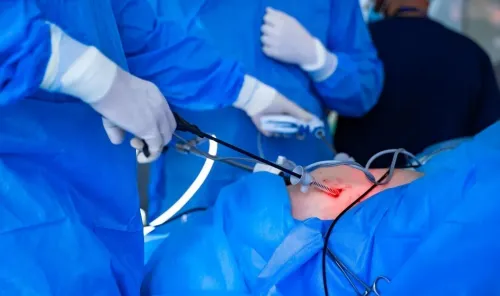
“Scarless” usually means scar-reducing, not scar-free. In single-incision gallbladder surgery, also called SILS, the surgeon makes one cut in or near the navel, which can still leave a visible scar. That wound can become infected or develop an incisional hernia.
The operation is a laparoscopic cholecystectomy: it removes the entire gallbladder, not just individual stones. The decision depends on expected benefit, operative risk and the cosmetic appeal of one incision.
| Option | What it involves | When it fits |
|---|---|---|
| SILS cholecystectomy | Removes the whole gallbladder through one navel incision | Repeated biliary pain, cholecystitis or gallstone complications when the surgeon considers the anatomy suitable |
| Observation | Leaves the gallbladder and stones in place | Incidentally found stones in someone with no symptoms |
| Medicines | Attempts to dissolve selected cholesterol stones over time | Only certain stone patterns; it does not remove a gallbladder that repeatedly causes symptoms |
Incidentally discovered, symptom-free stones often do not justify preventive surgery. Repeated biliary pain, gallbladder inflammation or complications can change that balance.
Medicines do not suit every stone pattern, can take a long time and do not prevent a repeatedly symptomatic gallbladder from causing trouble. When comparing “scarless gallbladder surgery mumbai” options, ask whether the cosmetic gain from one incision outweighs the access and wound risks.
The same applies when considering single incision gallbladder surgery over standard laparoscopy.
How does a general surgeon confirm that you need gallbladder surgery?
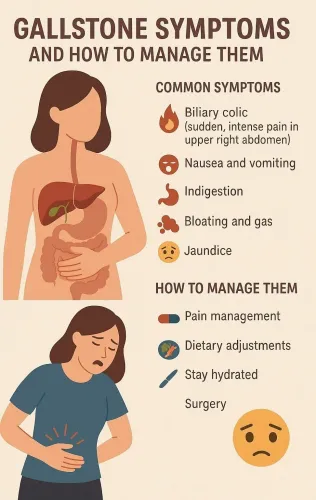
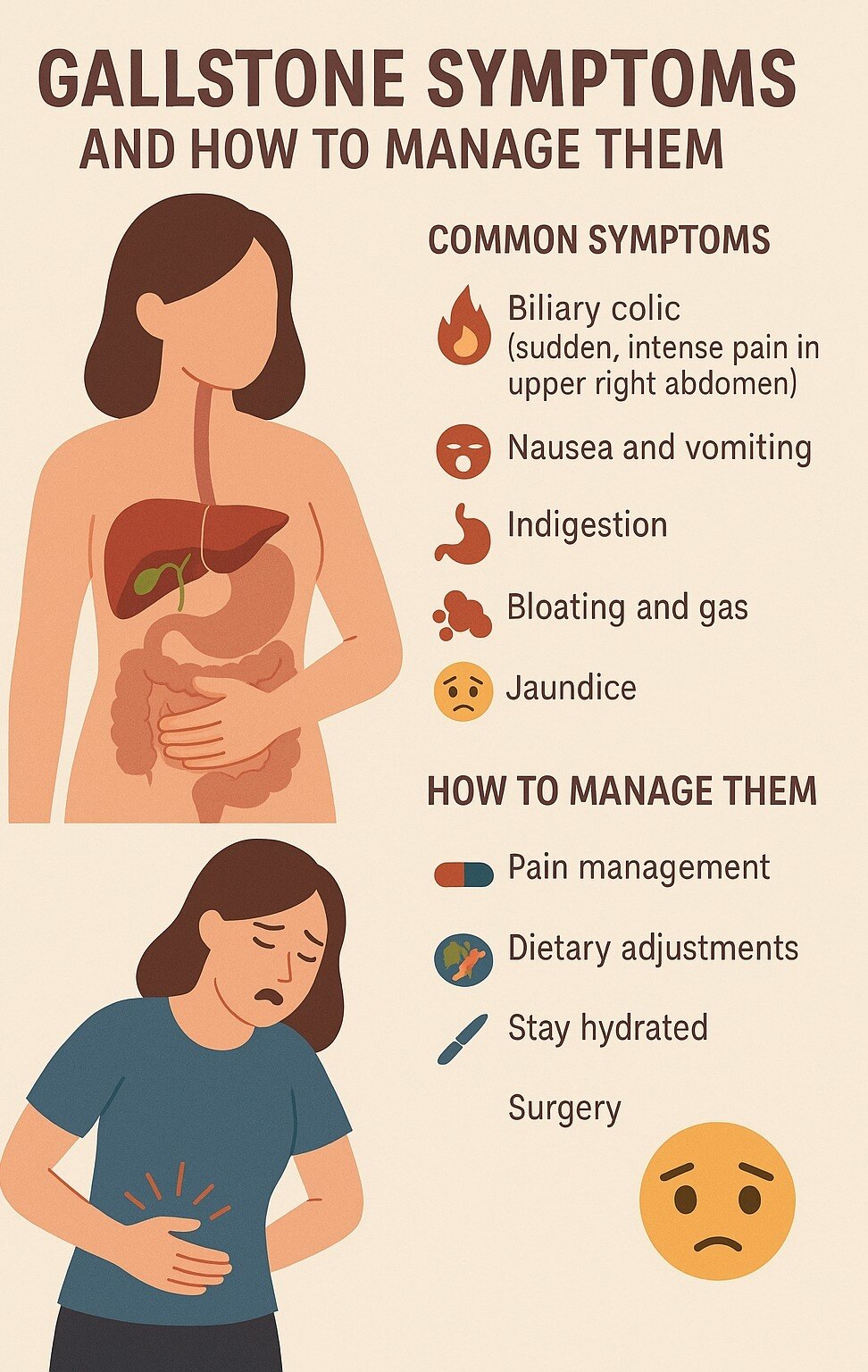
A general surgeon planning gallbladder treatment first checks whether your symptoms fit biliary pain: steady pain in the right upper abdomen or upper middle abdomen, often after eating, lasting 30 minutes to several hours, and sometimes spreading to the right shoulder or back. Diffuse pain, acidity, diarrhoea or brief stabbing episodes may point elsewhere.
Examination looks for right-upper-abdominal tenderness, guarding, fever, abdominal swelling and signs of jaundice. An abdominal ultrasound then records the number and location of stones, gallbladder-wall thickening, fluid around the gallbladder and widening of the bile ducts.
Stones alone do not prove they caused your pain; the surgeon must match the scan with your history and examination.
Blood tests commonly include bilirubin, AST, ALT and a complete blood count. Raised bilirubin or widened ducts can suggest a stone in the common bile duct rather than stones confined to the gallbladder.
MRCP provides detailed, non-invasive bile-duct imaging when that diagnosis is suspected; ERCP is considered when a duct stone is highly likely or needs removal, because it is an invasive endoscopic procedure.
Seek prompt medical assessment for:
- Persistent right-upper-abdominal pain
- Fever or severe tenderness
- Jaundice
- Repeated vomiting
- Dark urine or pale stools
These features can signal cholecystitis, bile-duct blockage or infection and need timely assessment rather than assuming another attack will settle.
Who is a suitable candidate for SILS?
SILS is worth discussing when your gallstones clearly cause symptoms and the surgeon expects safe, uncomplicated access. A search for a general surgeon for scarless gallbladder surgery in Ghatkopar should lead to a consultation, not an online eligibility verdict.
1. Confirm that repeated biliary pain, cholecystitis or another gallstone complication is driving the operation. Stones found incidentally without symptoms usually do not justify preventive removal.
2. Ask whether inflammation is chronic or manageable rather than severe and acute. Severe swelling can obscure the anatomy and make one-incision surgery unsafe.
3. Review the ultrasound together. The stone position, gallbladder condition and appearance of the bile ducts help show whether the anatomy is straightforward.
4. Tell the surgeon about every previous abdominal operation. Adhesions from earlier surgery can make instruments difficult to pass through one incision.
5. Discuss obesity, pregnancy, bleeding disorders and blood-thinning medicines. Pregnancy timing, clotting results and medication changes require individual medical advice; do not follow an online eligibility rule.
6. Share asthma, sleep apnoea, heart disease, lung disease, diabetes and any previous anaesthetic problem. These conditions affect anaesthetic planning, even when gallbladder removal is appropriate.
You can be medically fit for cholecystectomy yet better served by standard multiport laparoscopy, which gives the surgeon more working angles. The right choice depends on safe visibility and control, not simply the smallest number of scars.
When is standard laparoscopy safer than SILS?
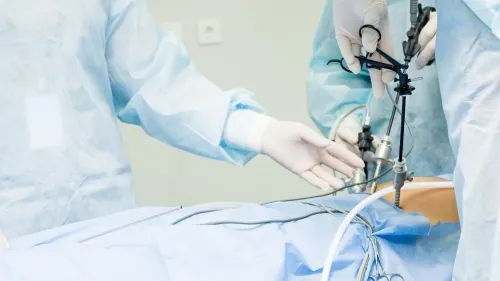
One incision does not automatically make surgery safer. In single-incision gallbladder surgery, the camera and instruments enter through one umbilical access point; standard multiport laparoscopy uses several small ports placed to create working angles.
| Approach | Access and appearance | Pain, recovery and technical trade-offs |
|---|---|---|
| SILS | One navel incision; usually the better cosmetic result | Pain and recovery are not consistently better; instrument crowding reduces triangulation and can lengthen surgery |
| Multiport laparoscopy | Several small incisions; more visible marks | Separate ports improve visibility, instrument control and exposure, often making difficult dissection safer |
| Either approach | Both remove the gallbladder, not just stones | Overall complication and conversion rates are not automatically better with SILS |
SILS can take longer because instruments cross at one entry point and limit precise traction. Standard laparoscopy may therefore be the safer starting option when the surgeon needs wider exposure or independent control of tissues. A surgeon performing sils cholecystectomy in Ghatkopar should explain when adding a port is preferable.
Before clipping or dividing anything, the surgeon should obtain the critical view of safety: clear the hepatocystic triangle, separate the lower gallbladder from the liver, and see only the cystic duct and cystic artery entering the gallbladder.
Start with standard laparoscopy, or change plans, when there is:
- Severe acute cholecystitis or dense scarring
- Unusual anatomy or suspected gallbladder cancer
- Bleeding or an unsafe view of the bile duct
The surgeon can add a port, use imaging, perform a subtotal cholecystectomy, or convert to open surgery. That is a safety decision, not a treatment failure.
What should you ask before choosing SILS with a surgeon in Ghatkopar?
Take your scan reports and blood-test results to a consultation with a general surgeon for scarless gallbladder surgery in Ghatkopar. ChirayuHealthcare Polyclinic&Diagnostics can provide a local surgical consultation and related diagnostic evaluation, but testing should determine the approach rather than a preference for SILS.
Ask these questions:
- Do my symptoms and examination point to the gallbladder, or could the pain have another cause?
- What does the ultrasound show about stones, inflammation, the gallbladder wall and bile ducts? What do my bilirubin, AST, ALT and blood-count results indicate? Is MRCP needed?
- Why does SILS suit my anatomy, stone position and inflammation? How often do you perform it?
- What are my risks of wound infection, an umbilical hernia, bile leak or bile-duct injury?
- How will you control pain, and when can I return to work?
- When would you add another port, perform a subtotal operation or convert to open surgery?
| Ask about the plan | What you need clarified |
|---|---|
| Visibility | How will you obtain the critical view of safety? |
| Changing course | Can the plan change during surgery if anatomy is unclear, bleeding occurs or scarring is dense? |
| Preparation | Which medicines require adjustment, and what anaesthetic risks apply? |
Bring your medication list and records of previous abdominal operations. For scarless gallbladder surgery Mumbai searches, choose the approach that gives the surgeon the safest view and adequate treatment—not simply the fewest visible scars.
Related products
 | Sils SILS/Scarless Cholecystectomy (single incision laparoscopic Cholecystectomy) SILS SILS is an advanced minimal invasive surgery in which surgery is done exclusively through single incision instead of 3-4 incisions in... View product → |
 | Gall Badder Calculli- stone disease Gall Bladder (Biliary) Stone Treatment Gall Bladder (Biliary) Stone Treatment is done by SILS Ie Single incision laparoscopic surgery which is most advanced form of laparoscopic surgery... View product → |
Frequently asked questions
What does scarless gallbladder surgery actually remove?
SILS cholecystectomy removes the entire gallbladder through one incision in or near the navel. It does not remove only the stones.
How does a general surgeon confirm that gallbladder surgery is needed?
The surgeon combines your symptoms and physical examination with an abdominal ultrasound and blood tests. Further imaging may be needed when the diagnosis or bile-duct involvement is unclear.
Who is a suitable candidate for SILS?
A surgeon assesses your symptoms, gallbladder inflammation, previous abdominal operations, body habitus, and anatomy before recommending SILS. The final choice depends on safety, not incision size alone.
When is standard laparoscopy safer than SILS?
Standard laparoscopy can provide safer access when there is severe inflammation, dense scar tissue, bleeding, unclear anatomy, or a difficult bile-duct dissection.
What should you ask before choosing SILS with a surgeon in Ghatkopar?
Ask about the surgeon’s SILS experience, the reason you need surgery, risks, likely incision, recovery, conversion to standard laparoscopy, and the plan for complications.