A laparoscopic hernia pathway includes far more than the operation itself: diagnosis, suitability assessment, anaesthesia planning, mesh selection, discharge instructions, and follow-up. By the end, you will know what to ask during a consultation, which details belong in the surgical quote, and when symptoms require urgent hospital assessment instead of routine scheduling.
Key takeaways
- Confirm the lump is a hernia before choosing laparoscopic repair.
- Ask whether TAPP, TEP, or open repair suits your hernia and medical history.
- Request details of mesh, anaesthesia, port closure, tests, and follow-up.
- Get written answers about surgeon experience, hospital support, costs, and warning signs.
What happens during the first hernia surgeon consultation in Ghatkopar?
A hernia surgeon consultation in Ghatkopar should confirm the diagnosis before anyone recommends laparoscopy. The surgeon needs to establish whether the lump is a hernia and whether treatment is necessary now.
1. The symptom history should cover the lump’s location and size, pain, duration, reducibility, and whether coughing, sneezing, lifting, or straining makes it appear or worsen. Mention constipation, chronic cough, previous abdominal or groin operations, anticoagulants, antiplatelet medicines, and conditions such as diabetes, heart disease, or lung disease.
2. The examination should include inspection and palpation while you are standing, coughing, and lying down. The surgeon should check whether the swelling returns into the abdomen with gentle pressure and distinguish a hernia from a hydrocele, enlarged lymph node, lipoma, or another groin mass.
3. Ultrasound is useful when the examination is unclear, the lump is small or intermittent, or another diagnosis is possible. Routine imaging is not necessary when the examination clearly shows an inguinal hernia.
Ask whether existing ultrasound or CT images were reviewed, whether new testing will be ordered, or whether the consultation includes neither ordering nor reviewing tests.
4. Ask about alternatives. Watchful waiting can suit an asymptomatic or minimally symptomatic inguinal hernia after counselling, while a symptomatic, enlarging, difficult-to-reduce, or obstructed hernia needs a surgical plan. Also ask whether the hernia is reducible and what non-laparoscopic options exist.
Which hernias suit laparoscopy, and when is open repair safer?
Laparoscopy suits many reducible inguinal, femoral, umbilical, and incisional hernias, but it is not automatically safer. Before booking laparoscopic hernia repair in Ghatkopar, the surgeon weighs anatomy, previous operations, adhesions, hernia size, infection, strangulation, bowel obstruction, and your fitness for general anaesthesia.
| Hernia type | Usual approach | Why it may apply |
|---|---|---|
| Primary bilateral inguinal | Laparo-endoscopic repair | Both sides can be treated through the same small-port access, avoiding two groin incisions. |
| Primary unilateral inguinal | Laparoscopic or open repair | Laparoscopy may reduce early pain and speed activity; open repair avoids abdominal or preperitoneal access. |
| Femoral | Laparoscopic or open repair | Laparoscopy gives broad coverage; strangulation or obstruction can favour urgent open surgery. |
| Umbilical or incisional | Laparoscopic or open repair | Size, location, prior abdominal surgery, adhesions, and mesh requirements determine the safer route. |
| Recurrence after anterior open repair | Laparo-endoscopic repair | It approaches the relatively untouched posterior tissue plane. |
| Recurrence after posterior or laparoscopic repair | Anterior open repair | A different tissue plane avoids dissecting scarred posterior tissues. |
| Infection, strangulation, or obstruction | Usually urgent open assessment | Contaminated or compromised bowel may make mesh placement or laparoscopy unsafe. |
A hernia surgeon consultation in Ghatkopar should confirm reducibility and review prior abdominal or preperitoneal operations before selecting a technique. Laparoscopy requires general anaesthesia, carbon-dioxide insufflation, and access-related risks involving bowel, bladder, vessels, or port sites; open repair may be safer when these risks outweigh faster recovery. Men with minimal symptoms may discuss watchful waiting.
Seek urgent hospital assessment for:
- Increasing pain, vomiting, distension, fever, skin discoloration, inability to pass stool or gas, or a lump that cannot be pushed back.
For general surgeon laparoscopic hernia repair for details in Ghatkopar, ask which approach fits your previous operations and current symptoms.
What do TAPP, TEP, mesh placement, and port closure include?
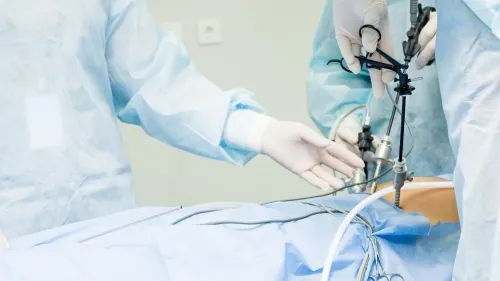
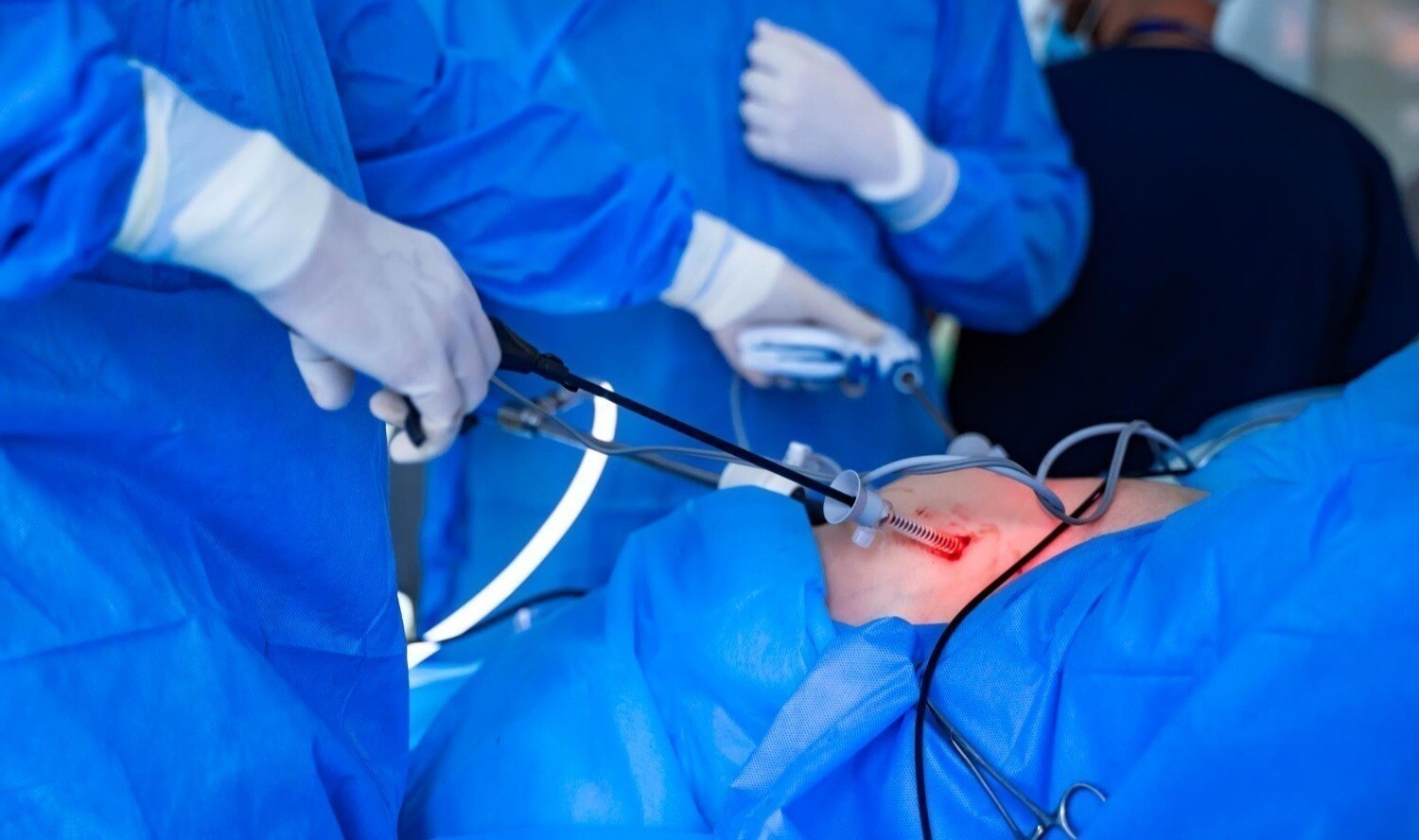
A laparoscopic hernia repair in Ghatkopar normally takes place under general anaesthesia. The surgeon inflates the abdomen or preperitoneal space with carbon dioxide, then inserts several small ports, usually near the navel and lower abdomen. Exact positions depend on the hernia and your anatomy.
1. In TAPP, the surgeon enters the peritoneal cavity, reduces the hernia sac and contents, and opens the peritoneum to reach the preperitoneal plane. In TEP, the surgeon reaches that plane directly without entering the abdominal cavity.
2. The surgeon inspects the entire myopectineal orifice and places a broad mesh over the direct, indirect, and femoral defect sites. These are important hernia surgery inclusions: the repair covers potential weak areas, not only the visible hole.
3. Ask what “mesh included” means in the estimate. It should identify the mesh material and dimensions, its preperitoneal placement, the fixation method, and whether mesh, tacks, glue, sutures, and other consumables are included.
4. Fixation can use absorbable tacks, glue, sutures, or no fixation. Non-fixation suits many smaller defects, while large medial defects often need fixation; fixation itself can contribute to pain or bleeding.
5. Ask whether a mesh-free repair fits your case and how each port will be closed. Sutures, staples, or skin adhesive may close the skin, while larger fascial openings need secure closure to prevent a port-site hernia. Confirm when unsafe anatomy or an injury could require conversion to open surgery.
Which tests, anaesthesia instructions, and follow-up belong in the pathway?
A low-risk, healthy patient does not automatically need every preoperative test. The anaesthetist chooses investigations after reviewing age, symptoms, medical conditions, medicines, and the planned general anaesthetic.
| Investigation | When it belongs | Key point |
|---|---|---|
| Complete blood count | Anaemia, infection risk, major illness, or specific surgical concerns | Not a universal requirement |
| Blood glucose | Diabetes, symptoms, or elevated risk | Guides diabetes management |
| Kidney function tests | Kidney disease, older age, relevant medicines, or clinical concern | Helps plan medicines and anaesthesia |
| Coagulation testing | Bleeding history, liver disease, anticoagulant use, or a related concern | Not a substitute for a medication review |
| Electrocardiogram | Cardiac symptoms, known heart disease, age-related risk, or anaesthetist request | Findings may change the anaesthetic plan |
| Chest evaluation | Respiratory symptoms, lung disease, or a specific clinical indication | Routine imaging is not automatic |
The hernia surgery inclusions should also cover a pre-anaesthesia assessment, allergy review, fasting instructions, and a written plan for anticoagulants, antiplatelets, and diabetes medicines. Do not stop prescribed medicines without instructions from the treating team. Confirm transport home and whether admission or same-day discharge is planned.
Discharge instructions should explain early walking, wound care, pain medicines, gradual activity progression, and the follow-up date. Consent should cover seroma, haematoma, urinary retention, infection, recurrence, chronic groin pain or numbness, and rare bowel, bladder, vascular, or vas deferens injury. A postoperative lump can be a seroma rather than immediate recurrence.
Seek review for fever, worsening pain, persistent vomiting, inability to pass urine, abdominal distension, wound redness or discharge, or a painful non-reducible swelling.
What should you ask a Ghatkopar provider before agreeing to repair?
Compare providers on the surgeon and the plan, not on promised scar size or same-day discharge. During a hernia surgeon consultation in Ghatkopar, ask which surgeon will operate, how frequently they perform TAPP and TEP, which approach fits your anatomy and previous operations, and whether both techniques are available.
Ask for written answers on:
- The mesh material, dimensions, placement plane, and fixation method: absorbable tacks, glue, sutures, or no fixation.
- Whether mesh, tacks, glue, medicines, consumables, facility charges, anaesthesia, surgeon fees, follow-up, and complication management are included in the estimate.
- The hospital or day-care setting, admission and discharge criteria, emergency contact number, and the plan if laparoscopy must become an open repair.
- Management of recurrence, chronic groin pain or numbness, infection, haematoma, urinary retention, or a persistent seroma. A postoperative lump can be a seroma rather than immediate recurrence.
| Approach | Access route | Question to ask |
|---|---|---|
| TAPP | Enters the peritoneal cavity, then closes the peritoneum over mesh | Why is abdominal entry suitable after my operations? |
| TEP | Works in the preperitoneal space without entering the abdominal cavity | Can you complete this safely with my anatomy? |
| Open conversion | Uses an anterior incision if laparoscopy is unsafe | What finding would trigger conversion? |
For general surgeon laparoscopic hernia repair for details in Ghatkopar, ChirayuHealthcare Polyclinic&Diagnostics can provide examination, imaging review, alternative discussion, and a test or anaesthesia-assessment list. Confirm its clinic-specific checklist directly.
Related product
 | Laparoscopic Hernia surgery Laparoscopic Hernial Repair View product → |
Frequently asked questions
What happens during a hernia surgeon consultation in Ghatkopar?
The surgeon examines the lump, reviews symptoms and medical history, confirms the diagnosis, and discusses whether repair is needed and which approach fits.
Which hernias suit laparoscopic repair, and when is open repair safer?
Laparoscopy often suits many groin hernias, bilateral hernias, and recurrent hernias after open repair. Open repair may be safer when prior abdominal surgery, medical risks, or the hernia’s size and position make laparoscopy unsuitable.
What do TAPP, TEP, mesh placement, and port closure include?
TAPP enters the abdominal cavity before placing mesh, while TEP works in the space outside the abdominal cavity. The pathway includes mesh positioning over the defect and closing the small port wounds.
Which tests, anaesthesia instructions, and follow-up belong in the pathway?
The pathway can include blood tests, urine testing, an ECG, imaging when the diagnosis is unclear, fasting instructions for general anaesthesia, medication guidance, wound review, and activity advice.
What should you ask a Ghatkopar provider before agreeing to repair?
Ask who will operate, why laparoscopy is recommended, which technique and mesh will be used, what the anaesthesia plan includes, how complications are handled, and what the quoted fee covers.