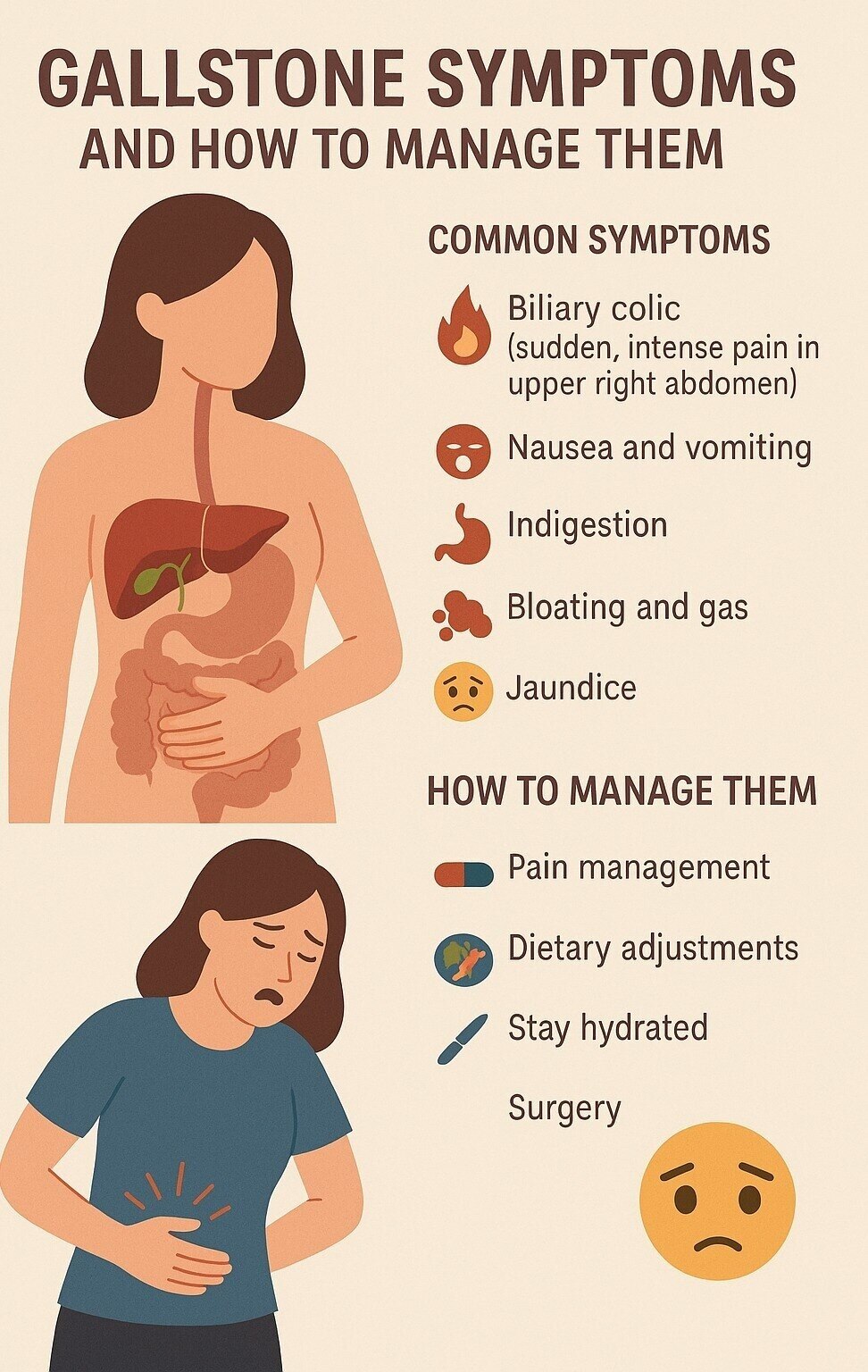
“Scarless” gallbladder surgery usually leaves a small incision at or inside the navel, so the important question is not whether a scar exists but whether the approach is safe for your condition. You will learn how surgeons assess eligibility, distinguish routine stone pain from urgent complications, compare single-incision and standard laparoscopy, and prepare for a useful consultation.
Key takeaways
- Scarless surgery uses one navel incision; it does not mean surgery without a wound.
- Fever, jaundice, persistent vomiting, or severe pain needs urgent medical assessment.
- Ultrasound finds most gallstones; liver tests and MRCP can assess bile-duct blockage.
- Ask about the surgeon’s experience, conversion risk, recovery, and alternatives before choosing single-incision surgery.
What does “scarless” gallbladder surgery actually involve?
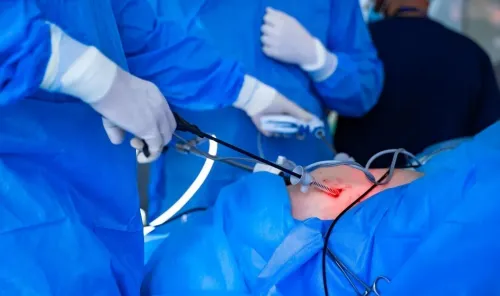
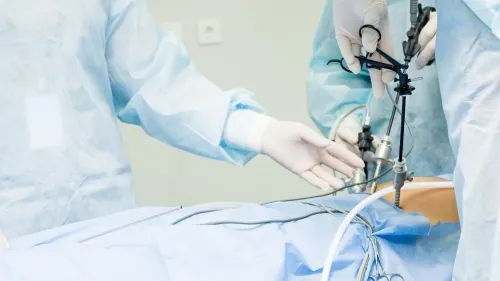
“Scarless” gallbladder surgery usually means single-incision laparoscopic cholecystectomy, also called single incision gallbladder surgery—not an operation without a wound. Under general anaesthesia, the surgeon makes one cut at or inside the navel and passes a camera and instruments through it.
The gallbladder is separated from the liver; after identifying the cystic duct and cystic artery, the surgeon clips and divides both, frees the gallbladder, removes it through the incision, and closes the wound.
The navel incision can still cause problems:
- The wound can widen, leaving a more visible scar.
- Bacteria can cause wound infection.
- The area can remain painful after the expected recovery period.
- A port-site hernia can develop through weakened abdominal muscle.
Cholecystectomy removes the gallbladder, not just the stones inside it. Leaving the gallbladder behind allows new stones to form and painful attacks to recur. Your liver continues making bile after surgery; bile flows directly into the intestine instead of being stored in the gallbladder.
A smaller scar can be a cosmetic advantage, but “scarless” does not guarantee a painless recovery or eliminate surgical risks.
Which gallstone problems need surgery, and which need urgent assessment?
An ultrasound finding does not automatically mean surgery. Symptom-free stones often stay under observation because an operation has risks, while repeated attacks or complications change the balance.
| Problem | What it means | Usual next step |
|---|---|---|
| Incidental asymptomatic stones | Stones found without typical symptoms | Observation and medical advice |
| Biliary colic | Episodic right-upper or upper-middle abdominal pain, often after meals | Discuss cholecystectomy if attacks recur |
| Acute cholecystitis | An inflamed gallbladder causing persistent pain and often fever | Prompt treatment discussion, often during the same admission |
| Choledocholithiasis | A stone in the common bile duct | Assess urgently; ERCP may clear the duct before gallbladder surgery |
| Gallstone pancreatitis | A blocked duct has inflamed the pancreas | Hospital assessment, treatment, then a plan to prevent recurrence |
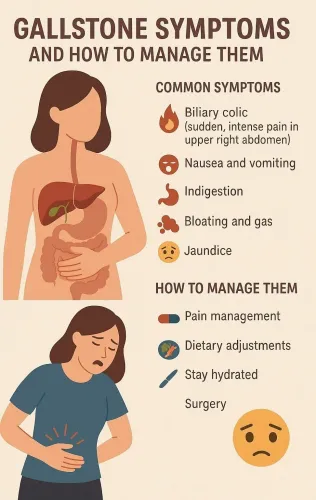
Seek urgent assessment for persistent right-upper-abdominal pain, pain lasting several hours, fever, jaundice, repeated vomiting, confusion, dark urine, or pale stools. Do not wait for a routine “scarless” consultation; these signs can indicate infection, obstruction, or pancreatitis.
Single-incision surgery is not automatically suitable after previous abdominal operations, with obesity, during pregnancy, or when inflammation, pancreatitis, suspected duct stones, or possible cancer makes access and diagnosis more difficult. A surgeon may recommend standard laparoscopy or another approach instead.
For gallbladder stone treatment in Ghatkopar, ask about suitability after examination and testing, not location or cosmetic promises.
How does a surgeon confirm gallstones and detect a blocked bile duct?
Ultrasound is usually the first imaging test because it is quick, widely available, does not use radiation, and can show gallstones, gallbladder inflammation, or a widened bile duct. Finding stones does not prove they caused every episode of pain; indigestion, ulcers, reflux, liver disease, and other conditions can produce similar symptoms.
Blood tests help show whether a stone has blocked bile flow or triggered inflammation:
- Liver-function tests, including alkaline phosphatase, gamma-glutamyl transferase, and AST or ALT, can suggest bile-duct obstruction or liver irritation.
- Bilirubin can rise when bile cannot drain normally, especially if the skin or eyes look yellow.
- Amylase or lipase is checked when severe upper-abdominal pain, vomiting, or pain radiating to the back raises concern for gallstone pancreatitis.
If a common bile duct stone remains possible, the next test depends on the findings and the risk of obstruction:
- Magnetic-resonance cholangiopancreatography (MRCP) maps the bile and pancreatic ducts without inserting an endoscope.
- Endoscopic ultrasound uses a small ultrasound probe near the ducts to detect small stones.
- Endoscopic retrograde cholangiopancreatography (ERCP) enters the duct through an endoscope and can remove a stone or relieve obstruction.
ERCP primarily treats the duct problem. It does not remove a symptomatic gallbladder, so a cholecystectomy surgeon in Mumbai may still recommend gallbladder removal after the duct is cleared.
How does single-incision surgery compare with standard laparoscopy?
Single-incision surgery can offer a less visible scar, but that advantage does not automatically make it safer or better.
| Option | Pain and recovery | Operating time and visibility | Cosmetic result | Additional-port or open conversion |
|---|---|---|---|---|
| Standard laparoscopy | Similar short-term pain and recovery | Usually more familiar and efficient, with better instrument angles | Three or four small scars | Less need to add a port; open conversion remains possible |
| Single-incision laparoscopy | Similar recovery, though wound pain can vary | Technically harder and often longer, with reduced instrument separation and visibility | One umbilical scar may look better | Another port or open surgery may be required for safety |
The critical view of safety means identifying the cystic duct and cystic artery before either is divided. Inflammation, bleeding, dense adhesions, unusual anatomy, or poor visibility can prevent that view. Adding a port, performing a subtotal cholecystectomy, draining the gallbladder, or converting to open surgery is then a safety decision, not necessarily a failure.
Ask about these risks before choosing “scarless gallbladder surgery near me”:
- Bile leak or a retained common-bile-duct stone
- Bleeding, infection, or wound and port-site hernia
- Bile-duct or bowel injury
- Blood clots or anaesthetic complications
A surgeon’s experience with both approaches matters more than the number of incisions promised.
What should you ask a gallbladder surgeon before choosing this approach?
Ask these questions before consenting:
- What recognised surgical training do you hold, and how often do you perform standard laparoscopic and single-incision cholecystectomies?
- What do my ultrasound, liver-function tests, bilirubin, and amylase or lipase show? Do I need MRCP, endoscopic ultrasound, or ERCP to check the common bile duct?
- How will you manage dense adhesions, bleeding, inflammation, or unusual anatomy if you cannot obtain the critical view of safety?
- When would you add an extra port, perform a subtotal cholecystectomy, drain the gallbladder, or convert to open surgery?
- Which hospital provides emergency care, and who reviews me after discharge?
| Choice | What to clarify | Why it matters |
|---|---|---|
| Single-incision approach | One navel incision, with a plan to add ports | Visibility and safe dissection come before appearance |
| Extra port | The surgeon’s conversion threshold | An added port can prevent injury |
| Open surgery | When and where it would occur | Conversion is a safety decision, not necessarily failure |
After an uncomplicated operation, you may go home the same day or stay overnight. Return to work varies with pain, job demands, operative difficulty, and complications. Seek review for fever, worsening abdominal pain, jaundice, repeated vomiting, increasing wound redness, or discharge.
A search for “gallbladder stone surgeon explains scarless for surgery in ghatkopar” or “scarless gallbladder surgery near me” should lead to questions, not a scar-free promise. A local consultation at ChirayuHealthcare Polyclinic&Diagnostics is useful when it answers these safety and follow-up points.
Related products
 | Gall Badder Calculli- stone disease Gall Bladder (Biliary) Stone Treatment Gall Bladder (Biliary) Stone Treatment is done by SILS Ie Single incision laparoscopic surgery which is most advanced form of laparoscopic surgery... View product → |
 | Sils SILS/Scarless Cholecystectomy (single incision laparoscopic Cholecystectomy) SILS SILS is an advanced minimal invasive surgery in which surgery is done exclusively through single incision instead of 3-4 incisions in... View product → |
Frequently asked questions
What does “scarless” gallbladder surgery actually involve?
It usually means single-incision laparoscopic cholecystectomy. The surgeon makes one cut at or inside the navel and inserts a camera and instruments under general anaesthesia. It is not completely wound-free.
Which gallstone problems need surgery, and which need urgent assessment?
Repeated biliary pain, acute cholecystitis, pancreatitis caused by gallstones, and complications from gallstones often require surgical assessment. Severe or persistent pain, fever, jaundice, dark urine, pale stools, or repeated vomiting needs urgent medical attention.
How does a surgeon confirm gallstones and detect a blocked bile duct?
An abdominal ultrasound usually confirms gallstones. Blood tests including bilirubin, alanine transaminase, aspartate transaminase, alkaline phosphatase, and lipase help identify complications. MRCP or endoscopic ultrasound can examine the bile duct when blockage is suspected.
How does single-incision surgery compare with standard laparoscopy?
Single-incision surgery uses one navel entry instead of several small abdominal incisions. It may leave less visible scarring, but it can require more specialised instruments, cost more, and be technically harder. Standard laparoscopy remains suitable for many patients.
What should you ask a gallbladder surgeon before choosing this approach?
Ask about the surgeon’s experience with single-incision cholecystectomy, your suitability, the chance of adding incisions or converting to open surgery, bile-duct imaging, expected recovery, complications, and alternative laparoscopic treatment.