The right surgeon depends less on the label “general surgeon” and more on the fistula’s anatomy, recurrence history, sphincter involvement and the surgeon’s experience with colorectal disease. By the end, you will know which warning signs need urgent drainage, what assessment complex disease requires and which questions to ask before agreeing to surgery.
Key takeaways
- Choose a specialist for recurrent, branching, high, horseshoe, or sphincter-involving fistulas.
- Seek urgent care for fever, spreading redness, severe pain, or difficulty passing urine.
- Ask how MRI, examination, and prior surgery will guide your operation.
- Compare continence-preserving techniques, recurrence plans, and follow-up access before booking.
Should you choose a fistula specialist or a general surgeon?
Choose a surgeon who routinely treats anal fistulas, not simply the clinician with the most impressive procedure list. A general surgeon for fistula can be an appropriate first choice for a straightforward, low tract, while a colorectal or proctology specialist is preferable for recurrent, branching, horseshoe, high, Crohn’s-related, or sphincter-involving disease.
| Clinician | What to verify | Appropriate first choice |
|---|---|---|
| General surgeon | Regular fistula case volume, continence assessment, and a plan for referral if the tract is complex | A first episode with a clearly low, uncomplicated tract |
| Colorectal or proctology specialist | Experience with sphincter-preserving procedures, recurrence, MRI fistula protocols, and examination under anaesthesia | Suspected complex, recurrent, high, or branching fistula |
| General surgeon with colorectal experience | Documented case volume and access to pelvic MRI, endoanal ultrasound, or specialist backup | Complex disease when specialist access is limited |
The external opening cannot reveal the whole tract. Your first clinician should inspect the area, perform a digital rectal examination and proctoscopy when suitable, ask about leakage or urgency, and discuss prior surgery or childbirth-related sphincter injury.
Ask how often the surgeon performs fistula surgery and who manages recurrence or postoperative incontinence. If symptoms persist or complexity is suspected, MRI pelvis with a fistula protocol or examination under anaesthesia can prevent an operation based on incomplete anatomy.
This is the key distinction when searching for a fistula specialist or general surgeon in ghatkopar.
What makes an anal fistula complex, and when is it urgent?
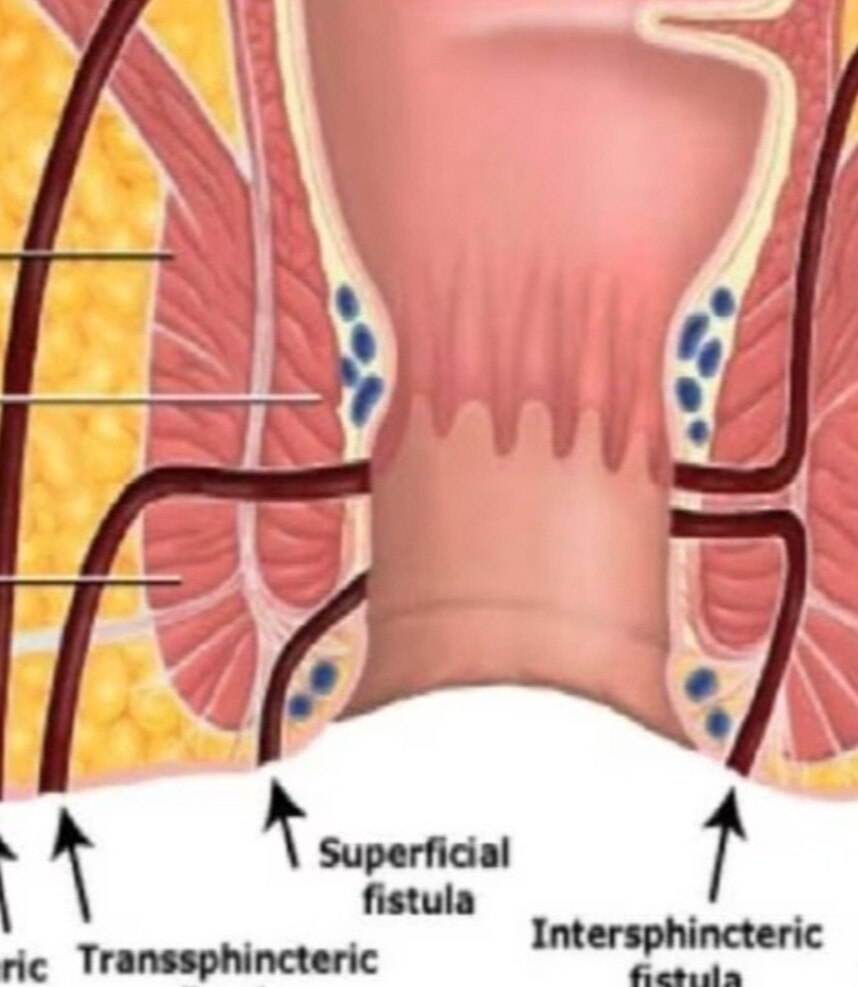
A simple anal fistula is usually a low intersphincteric or low transsphincteric tunnel crossing less than about 30% of the external anal sphincter. It often has one external opening and no large abscess, but the opening on the skin cannot reveal the full tract.
Complex disease is more likely when you have:
- A high, suprasphincteric or extrasphincteric tract, or a horseshoe route around the anus
- Branching or multiple tracts, recurrent fistula, or repeated abscesses
- Substantial sphincter involvement, previous sphincter injury, or existing leakage of stool
- An anterior fistula in a woman
- Crohn’s disease, suggested by chronic diarrhoea, weight loss, abdominal pain, mouth ulcers, or joint or skin symptoms
A painful, hot, fluctuant lump points more strongly to an abscess than an established fistula. Fever, rapidly worsening pain or swelling, spreading redness, difficulty passing urine, or feeling faint requires urgent drainage assessment; antibiotics alone do not reliably treat an abscess. Fissure, haemorrhoids, hidradenitis, and pilonidal disease can also cause pain or discharge.
Before complex fistula surgery in Ghatkopar, examination under anaesthesia and pelvic MRI with a fistula protocol or endoanal ultrasound can map hidden branches and sphincter muscle.
What happens during the first assessment and imaging work-up?
The first assessment combines a history, anorectal examination and targeted imaging; no single test reliably maps every fistula. Ask about discharge, recurrent swelling, previous operations, bowel symptoms and baseline continence, including leakage, urgency or staining.
| Assessment | What it can reveal | When it matters |
|---|---|---|
| Inspection and digital rectal examination | External openings, tenderness, induration, abscess and a palpable internal tract | Every assessment; an external opening alone cannot show the full route |
| Proctoscopy | Anal-canal inflammation, bleeding and a possible internal opening | When the opening is visible or another anal condition needs exclusion |
| Examination under anaesthesia | The internal opening, tract direction and openings that pain or muscle spasm hide | Suspected complex, recurrent or branching fistula; it allows careful probing without forcing the tract |
| Pelvic MRI with a fistula protocol | Secondary branches, horseshoe extensions, abscess cavities and sphincter involvement | Preferred for recurrent or complex fistulas before surgery |
| Endoanal ultrasound | The tract’s relationship to the internal and external sphincters | Useful when MRI is unsuitable or detailed sphincter assessment is needed |
MRI complements examination; a normal scan does not dismiss persistent symptoms. Multiple fistulas, diarrhoea, weight loss, abdominal pain, oral ulcers, or joint and skin symptoms warrant discussion of Crohn’s disease and coordinated gastroenterology care. The surgeon should explain how much sphincter the tract crosses before recommending fistulotomy.
Which fistula operations balance healing with continence?
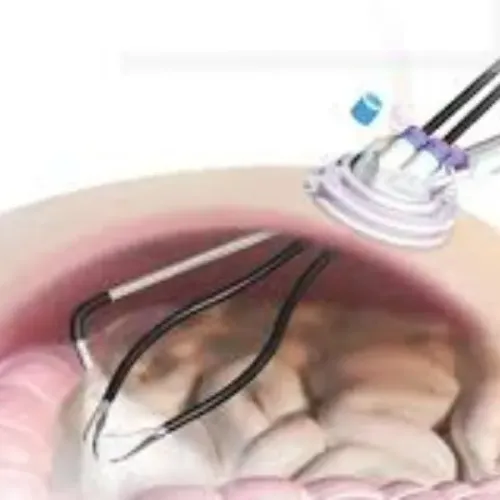
A low fistula with little sphincter involvement often heals best after fistulotomy: the surgeon opens the tract so it heals from the base. Cutting through substantial sphincter muscle can cause leakage, urgency or worsened faecal incontinence, so a quick fistulotomy is not automatically the safest choice.
| Option | Main benefit | Main trade-off |
|---|---|---|
| Fistulotomy | High healing potential for simple, low tracts | Sphincter division and continence risk when the tract is high or muscle-heavy |
| Draining seton | Keeps infection draining while protecting the sphincter | Controls sepsis but is not necessarily a cure; ask whether it is temporary, staged or long-term |
| LIFT | Closes the tract through the intersphincteric plane with limited muscle cutting | Healing can be less certain, and recurrence may require further treatment |
| Advancement flap | Covers the internal opening without dividing much sphincter | Technically demanding; persistence or recurrence remains possible |
| Staged treatment | Treats infection first, then uses LIFT, flap or another repair | Requires more than one procedure and a longer treatment pathway |
A loose seton often comes first when abscess or active infection makes immediate repair unsafe. Before choosing, discuss baseline continence, previous anal surgery, childbirth-related injury and the amount of muscle in the tract; those details change the balance between healing and continence.
What should you expect after fistula surgery?
Anaesthesia depends more on tract complexity than on the operation’s name. A simple fistulotomy may be a day-case procedure under local, regional or general anaesthesia; complex, recurrent or staged surgery usually requires general or regional anaesthesia in an operating theatre.
| Procedure | Anaesthesia and wound | Bowel movements, work and follow-up |
|---|---|---|
| Fistulotomy | Usually day-case; the open groove needs regular washing and dressing | Passing stool can sting for several days. Desk work often takes a few days to two weeks; healing and review continue until the wound closes. |
| Loose seton | Usually placed under anaesthesia; the seton remains through the opening, which must stay clean and draining | Bowel movements are usually manageable, but discharge continues. Work absence is often short; follow-up confirms drainage and decides the next stage. |
| LIFT or advancement flap | Usually general or regional anaesthesia; the wound may be closed or partly open | Avoid straining and heavy lifting during early healing. Expect roughly one to three weeks away from physical work, with review to check healing and recurrence. |
Use water after each bowel movement, pat dry, and follow the prescribed pain-relief and stool-softening plan. Contact the surgeon for fever, worsening pain, spreading redness, heavy bleeding, urinary difficulty or a blocked seton. Complex cases need scheduled reviews and sometimes MRI or examination under anaesthesia if drainage or symptoms persist.
How should you compare local surgeons before booking treatment?
Choose treatment by anatomy and continence risk, not by title alone. A fistula specialist in Ghatkopar should explain how the tract is classified and why a fistulotomy, loose seton, LIFT or flap suits you. If you searched for a fistula surgeon near me, ask:
- How many anal fistula operations do you perform each year?
- How will you find the internal opening, branches and sphincter involvement?
- Do you use pelvic MRI with a fistula protocol, endoanal ultrasound or examination under anaesthesia when needed?
- Will you assess existing leakage, urgency, previous anal surgery or childbirth-related sphincter injury before recommending treatment?
- Is a seton intended for drainage, staged treatment or long-term use?
- Who treats recurrence or postoperative incontinence?
| Clinician | Strength | Verify before booking |
|---|---|---|
| General surgeon | Appropriate for a straightforward, low fistula | Experience with anal disease and continence-preserving options |
| Colorectal or proctology surgeon | Better suited to recurrent, horseshoe, high, Crohn’s-related or sphincter-involving fistulas | Case volume, imaging access and recurrence plan |
ChirayuHealthcare Polyclinic&Diagnostics can support local surgical assessment and follow-up; confirm whether MRI, examination under anaesthesia and specialist referral occur onsite or through a partner. Never accept a plan based only on the external opening.
Related service
Fistula Surgery we are specialized in complex fistula surgeries View service → |
Frequently asked questions
Should you choose a fistula specialist or a general surgeon?
A general surgeon can treat a straightforward low fistula. Choose a colorectal or proctology specialist for recurrent, branching, horseshoe, high, Crohn’s-related, or sphincter-involving disease.
What makes an anal fistula complex or urgent?
Complex fistulas include recurrent, branching, horseshoe, high, Crohn’s-related, or sphincter-involving tracts. Fever, spreading redness, severe pain, or difficulty passing urine requires urgent medical assessment.
What happens during the first fistula assessment?
The surgeon reviews symptoms and previous procedures, examines the area, and decides whether imaging such as pelvic MRI is needed to map the tract and sphincter involvement.
Which fistula operations help balance healing with continence?
The operation depends on tract location and sphincter involvement. Options can include fistulotomy, seton placement, LIFT, advancement flap, or other sphincter-preserving procedures.
What should you expect after fistula surgery?
Expect wound-care instructions, pain-control guidance, bowel-management advice, and follow-up. Ask when you can work, exercise, bathe, and report signs of infection or recurrence.