

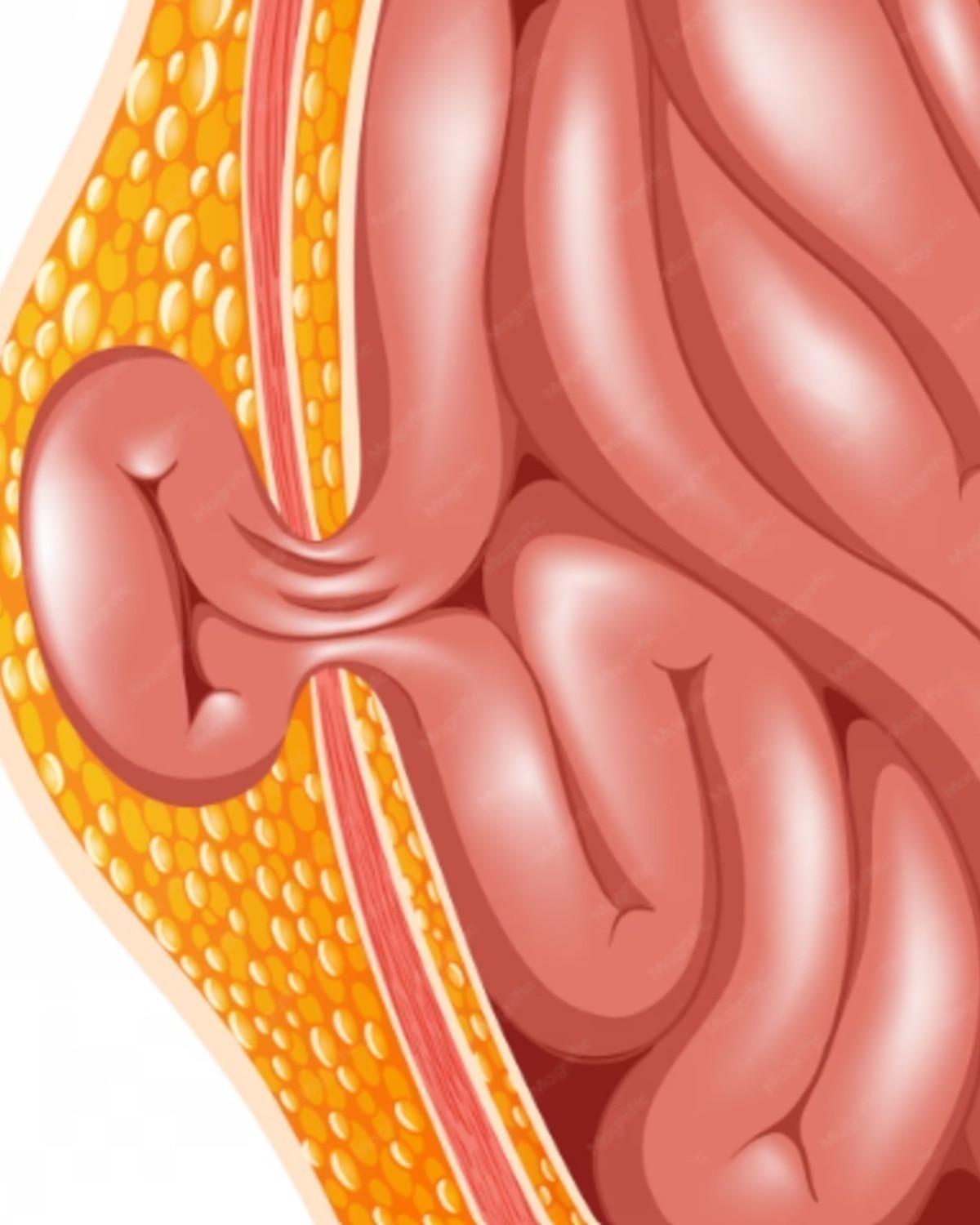
A new or painful bulge does not always require the same type of treatment, and a painless lump is not automatically harmless. By comparing symptoms, urgency, diagnostic steps, observation, open repair and laparoscopic repair, you can identify when to seek emergency care and what to ask a hernia surgeon before choosing treatment.
Key takeaways
- Seek assessment for painful, enlarging or irreducible hernias.
- Ultrasound or CT can find a hernia without an obvious lump.
- Watchful waiting suits selected symptom-free hernias, not emergencies.
- Ask about surgical approach, mesh, recurrence and recovery before choosing repair.
Which hernia types need a general surgeon’s assessment?
Most abdominal-wall hernias need a general surgeon’s assessment, including inguinal, femoral, umbilical, epigastric and incisional hernias. Hiatal hernias are usually evaluated by a gastroenterologist and an upper gastrointestinal or general surgeon when repair is considered.
| Hernia type | Specialist usually involved | Routine assessment |
|---|---|---|
| Inguinal hernia | General surgeon | Groin bulge, pressure or lifting pain |
| Femoral hernia | General surgeon | Prompt review, especially in women |
| Umbilical hernia | General surgeon | Understanding umbilical hernia symptoms and treatment |
| Epigastric hernia | General surgeon | Upper-abdominal lump or exertional pain |
| Incisional hernia | General surgeon | Bulge at a previous operation site |
| Hiatal hernia | Gastroenterologist and upper gastrointestinal surgeon | Reflux, chest discomfort or swallowing difficulty |
Arrange a routine consultation for a bulge that appears when standing or coughing, groin or abdominal pressure, pain during lifting, or a painless lump that still reduces. A belt or binder can support the area temporarily, but it does not close the defect.
Go to an emergency department for severe constant pain, a firm tender lump that will not go back in, skin colour change over the bulge, vomiting, abdominal distension, or inability to pass stool or gas. These signs can indicate obstruction or strangulation.
How is a hernia diagnosed when the lump is not obvious?
A hernia diagnosis often comes from history and a careful hernia examination, even when no lump is visible. Tell the clinician when discomfort occurs, whether it follows lifting, coughing or prolonged standing, and whether any bulge disappears while lying down.
The examination usually starts with you standing. The clinician inspects and feels the groin or abdominal wall, then asks you to cough or strain so a small defect becomes more apparent. Examination while lying down checks whether the bulge reduces and whether it is tender, firm or fixed.
Imaging adds value when the examination is inconclusive, especially with obesity, an occult hernia, a recurrent repair or a complex abdominal-wall defect.
- Hernia ultrasound can show movement through a defect during coughing or straining and help distinguish a hernia from a swollen lymph node or other lump.
- A CT scan for incisional hernia maps the defect, abdominal contents, additional defects and loss of domain before reconstruction.
- MRI helps investigate persistent groin symptoms when ultrasound is negative or unclear and another cause remains possible.
Normal blood tests, an ECG or cardiac testing cannot rule out a mechanical hernia. They assess other conditions and anaesthesia risk; they do not replace examination or appropriate imaging.
When is watchful waiting reasonable, and when should you choose repair?
Watchful waiting for inguinal hernia is reasonable for a man with an asymptomatic or minimally symptomatic, reducible hernia who understands the risks and can obtain prompt review. It is not a cure: long-term follow-up found that about 70% eventually chose surgery, most often after symptoms increased.
| Choice | What it involves | When it fits |
|---|---|---|
| Watchful waiting | Monitoring symptoms and size without closing the defect | Selected men with a painless or mildly uncomfortable reducible inguinal hernia |
| Elective hernia repair | Planned surgery after assessment of the defect and risks | Growth, pain, activity limits, or increasing concern about emergency obstruction |
| Urgent assessment | Same-day medical review rather than routine scheduling | The lump becomes difficult or impossible to reduce, firm, very tender, discoloured, or accompanied by vomiting or distension |
A painless reducible hernia still needs review because the defect can enlarge, conceal a femoral hernia, or become harder to repair later. Watchful waiting is less suitable for women with groin hernias because femoral hernias carry a higher emergency risk.
A hernia belt can support the bulge during selected activities, but it does not close the opening. Choose elective hernia repair when pain limits lifting, walking or work, the lump grows, or reduction becomes difficult. Repair also does not guarantee that existing pain will disappear, and mesh repair carries risks including chronic pain.
Open or laparoscopic hernia repair: which approach fits your situation?
Open hernia repair versus laparoscopic repair depends on the defect, your previous operations and your fitness for anaesthesia—not on which label sounds newer.
| Option | Incision and anaesthesia | Mesh and recovery | When it fits |
|---|---|---|---|
| Open repair | One incision over the hernia; local, regional or general anaesthesia | Mesh is common; recovery is often longer for groin repairs | Useful when general anaesthesia is risky, the hernia is large or complex, or an anterior repair suits a recurrence |
| Laparoscopic repair | Several small abdominal incisions; general anaesthesia | Mesh covers the internal defect; laparoscopic hernia surgery recovery is often faster with less early groin pain | Particularly useful for bilateral groin hernias or recurrence after an earlier open repair |
| Robotic repair | Small abdominal incisions; general anaesthesia | A variation of minimally invasive mesh hernia repair; it can add time and cost without proven routine outcome superiority | Consider only when the surgeon’s expertise and your anatomy justify it |
Previous abdominal or pelvic operations can leave adhesions that make laparoscopy harder or riskier. A previous posterior repair may favour an open anterior approach; recurrence after an open repair may favour laparo-endoscopic repair.
Severe pain, vomiting, abdominal swelling, skin colour change or a firm irreducible lump suggests obstruction or strangulation. That needs urgent assessment, not a choice between techniques.
Open surgery may be preferable with high general-anaesthesia risk, a very large or complicated hernia, strangulation, or limited laparoscopic expertise. Ask for the anatomical repair, mesh plan and anaesthesia—not simply “laser” or robotic repair.
What affects recovery, complications and long-term results?
Smoking, obesity and poorly controlled diabetes increase wound infection, breathing and recurrence risks. Chronic cough, constipation and repeated straining keep abdominal pressure high, which can stress the repair. Improving these factors before surgery can matter as much as choosing between open and laparoscopic repair.
Preoperative tests for hernia surgery assess fitness, not the defect itself. Blood tests can identify anaemia, infection, kidney problems or diabetes; an ECG and cardiac testing assess rhythm, heart function and anaesthetic risk. A normal result cannot rule out a mechanical hernia, recurrence or bowel involvement, and does not replace examination or appropriate imaging.
Use this checklist to support hernia surgery recovery:
- Stop smoking and follow the advised cessation period.
- Improve blood-glucose control and discuss weight management.
- Treat a persistent cough before elective repair.
- Address constipation and avoid repeated straining.
- Ask which activity limits apply while the abdominal wall heals.
Hernia repair complications include infection, bleeding, urinary problems, recurrence and nerve-related pain. A repair does not guarantee that all pain will disappear. Chronic pain after hernia repair means pain lasting at least three months; assess its location, triggers, nerves, mesh or fixation, recurrence and other causes before considering treatment.
Recurrence or persistent pain needs structured review, not automatic reoperation.
How should you choose a hernia surgeon and prepare for the consultation?
Bring prior scans, operation notes, medication lists and details of smoking, diabetes, cough or constipation to your hernia surgeon consultation. These questions to ask a hernia surgeon keep the discussion specific:
- How many repairs of my hernia type and location do you perform?
- Which anatomical defect will you close, and by what route?
- Will you use mesh, a non-mesh tissue repair or mesh fixation? Why?
- What does “laser” mean here, and is it an established open or laparo-endoscopic repair?
- What anaesthesia is required, and what risks apply to me?
- Do I need ultrasound, CT or MRI, or is examination sufficient?
- When can I drive, work, lift and exercise?
- What are the alternatives, including observation or a hernia surgery second opinion?
| Option | Main question | Key trade-off |
|---|---|---|
| Open repair | Is an anterior repair preferable? | Avoids abdominal entry; recovery and pain vary |
| Laparoscopic repair | Is general anaesthesia safe for me? | Faster recovery; requires specialist training |
| Non-mesh repair | Why does mesh not suit my defect? | Avoids mesh; recurrence can be higher |
A hernia repair specialist Mumbai patients consult at ChirayuHealthcare Polyclinic&Diagnostics can review examination and related diagnostic needs, but only your findings determine the plan.
Related product
 | Laparoscopic Hernia surgery Laparoscopic Hernial Repair View product → |
Frequently asked questions
Which hernia types need a general surgeon’s assessment?
A general surgeon assesses inguinal, femoral, umbilical, epigastric and incisional hernias. Hiatal hernias usually involve a gastroenterologist and an upper gastrointestinal or general surgeon when repair is considered.
How is a hernia diagnosed when the lump is not obvious?
The surgeon reviews symptoms and examines you while standing, coughing or straining. Ultrasound can assess the abdominal wall, while CT can show deeper or complicated hernias.
When is watchful waiting reasonable for a hernia?
Watchful waiting can suit a small, reducible hernia without pain or activity limits after a surgeon assesses it. Choose prompt review for increasing pain, vomiting, bowel changes or a lump that will not go back in.
Is open or laparoscopic hernia repair better?
Open repair uses an incision over the hernia. Laparoscopic repair uses small abdominal incisions and may suit selected groin or recurrent hernias; the choice depends on hernia location, size, previous operations, health and surgeon expertise.
What should you ask a hernia surgeon before repair?
Ask which repair fits your hernia, whether mesh is recommended, what complications and recurrence risks apply, how pain will be managed, and when you can return to work and exercise.